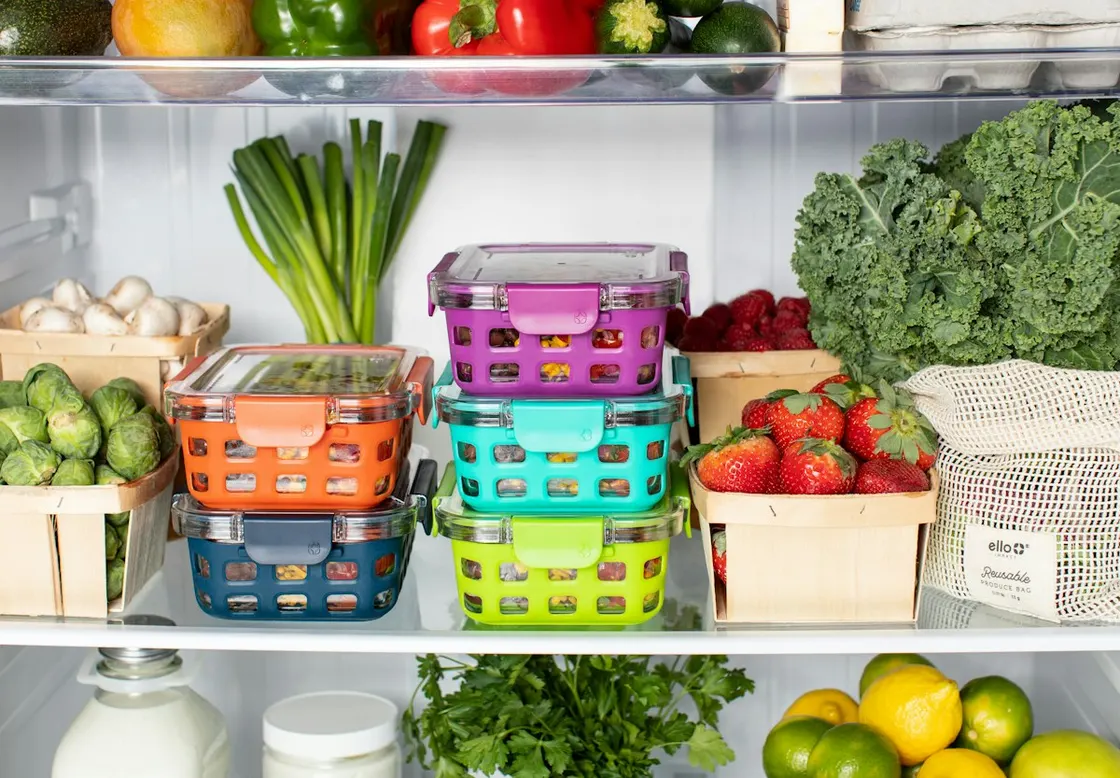
Putting away dinner involves several separate decisions: how quickly to cool it, where to store it, when to use it and how to reheat it. A label helps you remember the meal, but it cannot establish that the food was handled safely.
This guide uses U.S. household advice from the FDA, USDA and the federal FoodSafety.gov website. The time and temperature rules below belong to that guidance. If you live elsewhere, use your country’s food-safety authority and the product’s instructions; do not combine convenient parts of different systems. This is about ordinary home leftovers, rather than commercial catering or food affected by a power cut.
Start putting food away promptly
Under U.S. guidance, perishable food should be refrigerated within two hours of cooking or removal from equipment keeping it hot. The limit becomes one hour when the surrounding temperature is above 90°F, approximately 32°C. These are limits, not suggested waiting periods. Food already left out beyond the relevant limit should be discarded. USDA leftovers guidance.
Make storage part of clearing the table. Get the containers ready, divide what you intend to keep, and put it away before moving on to the rest of the washing up. If you cannot remember the handling history, do not invent a reassuring time for the label.
A takeaway box also needs prompt attention. Going directly home makes it easier to refrigerate the food; a long sequence of errands works against that plan. U.S. restaurant-leftovers guidance.
Cool in smaller, shallow containers
Divide a large pot of soup or stew among smaller, shallow containers. Cut large cooked pieces into smaller portions. U.S. federal guidance says hot food can go directly into the refrigerator; you do not need to leave it on the counter until it reaches room temperature. FoodSafety.gov cooling advice.
Choose containers suitable for the food and intended use. Leave room for cold air to circulate rather than packing the refrigerator tightly. The FDA advises storing refrigerated food in covered containers or sealed bags. FDA storage guidance.
If the only available container is a deep pot, finding several smaller containers is a more useful next step than setting the pot aside and forgetting it. Keep the method straightforward enough to do while dinner is being cleared.
Check the appliance, then the calendar
FDA guidance specifies a refrigerator at or below 40°F (4°C) and a freezer at 0°F (−18°C). Use an appliance thermometer to check the temperature. The dial setting alone does not tell you what temperature the food-storage space has reached. FDA refrigerator and freezer advice.
The U.S. cold-storage chart lists three to four refrigerated days for soups and stews, cooked meat or poultry leftovers, and pizza. Other foods have their own entries. This period assumes appropriate handling and refrigeration; it does not make improperly stored food safe. Check the applicable entry and any product instructions rather than assigning the same lifetime to everything. FoodSafety.gov cold-storage chart.
Write the food’s name and original cooking date on the container. Add a planned meal or freezer decision while you remember what is inside. Keep the original date visible if you move the food into a different container.
Decide about freezing while the food is still suitable
If you will not use properly handled leftovers within their refrigerated storage period, freeze them promptly. The federal cold-storage chart separates refrigerated limits from freezer-quality guidance: food kept continuously frozen at 0°F (−18°C) or below has a different storage basis. U.S. storage chart.
Label the container with its contents and freezing date. Our freezer-inventory sheet can help you find it later, although the sheet itself does not judge safety.
For a simple thawing plan, use the refrigerator rather than the countertop. Follow the relevant thawing and reheating instructions for the particular dish. FoodSafety.gov chilling guidance.
Reheat with a thermometer
U.S. guidance says reheated leftovers should reach 165°F, approximately 74°C, measured with a food thermometer. Bring soups, sauces and gravies to a rolling boil. For a microwave, use a microwave-safe dish, cover appropriately and allow steam to escape. Check several places because heating can be uneven. USDA reheating guidance.
Stir where appropriate, and follow specified standing times. A package’s microwave directions may require a particular method, so keep them available. FoodSafety.gov microwave guidance.
Take out the amount you intend to eat, leaving the rest properly refrigerated. Do not taste uncertain food to decide whether it is safe: harmful contamination may not announce itself through taste or smell. U.S. restaurant-leftovers advice.
Keep this U.S. leftovers checklist nearby
- Food and original cooking date: ______
- Time cooked or removed from hot holding: ______
- Refrigerated promptly within the applicable U.S. limit: checked / uncertain
- Divided into suitable shallow containers: ______
- Refrigerator thermometer reading: ______
- Relevant storage-chart entry or package instruction: ______
- Planned meal or freezing date: ______
- Reheating method and measured temperature: ______
An uncertain answer needs resolving before the food becomes lunch. For organizing future meals around what you can safely use, see the mix-and-match shopping guide.