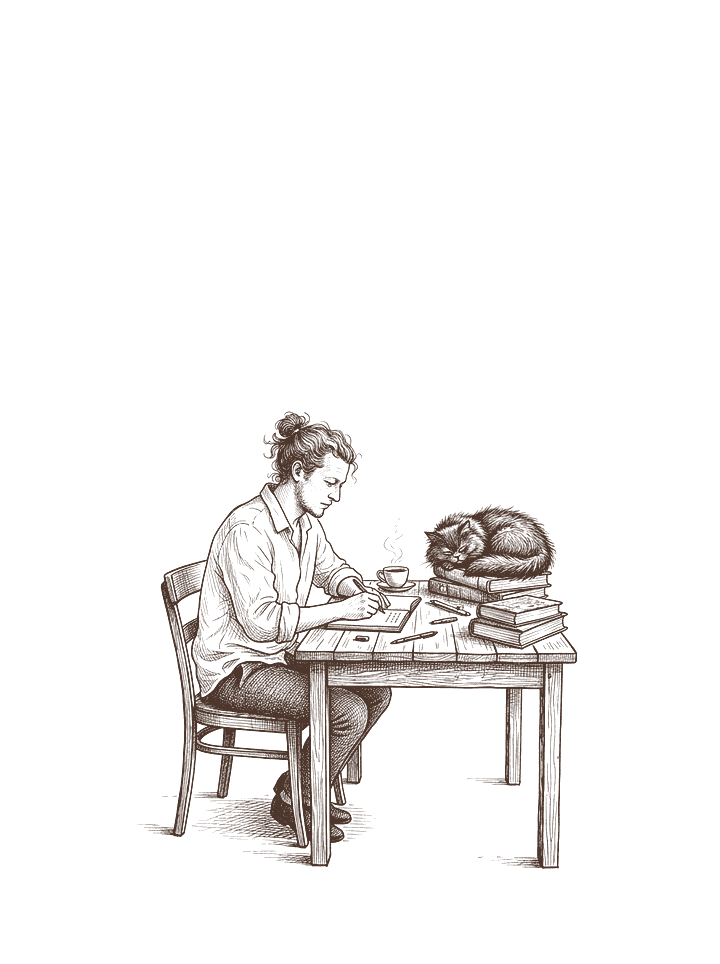
The person behind Good & Steady
Pavel Rachkouski
Founder & Editor of Good & Steady.
Creating practical guides and tools to help people make room for health, one realistic week at a time.
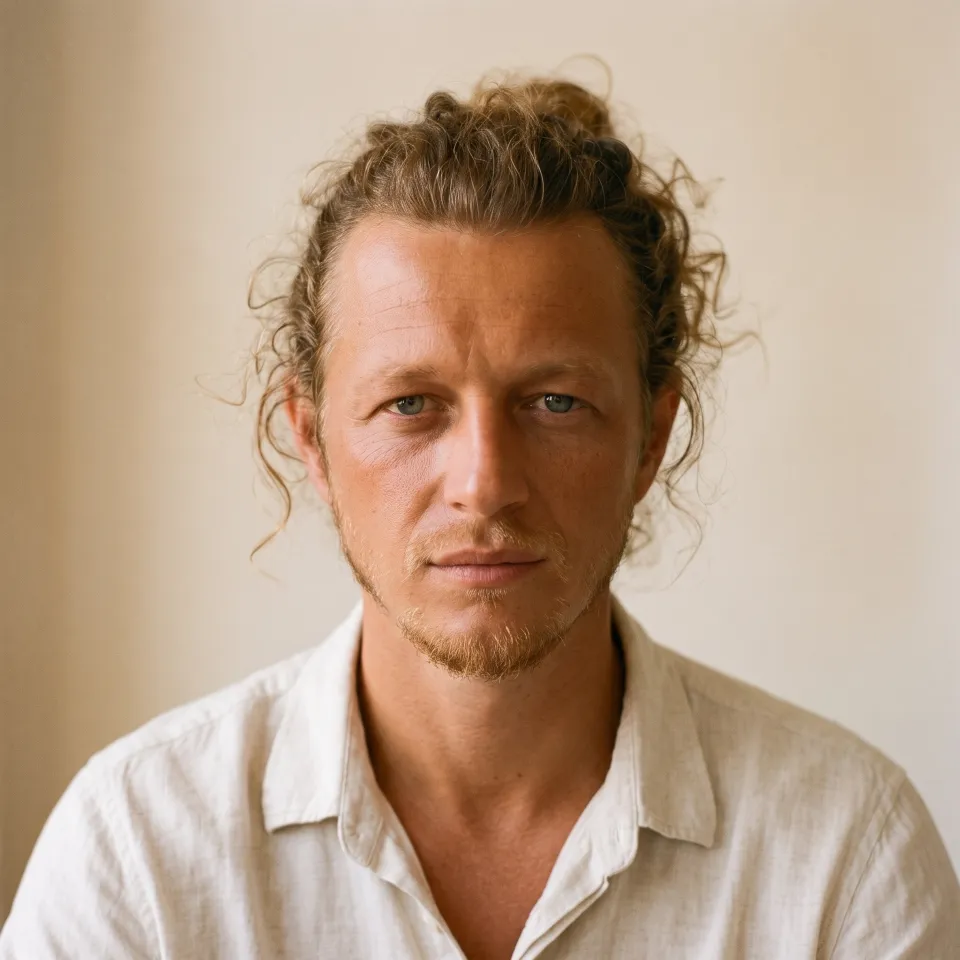
Who I am
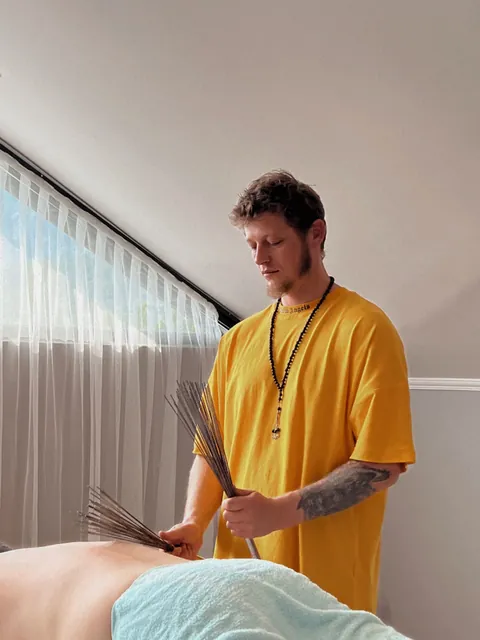
I’m Pavel Rachkouski. I work with the body: massage, my own way of working that I call “Twelve Touches”, sound and tea. I’m a bodyworker, not a doctor.
I grew up in Belarus. I lost my mother when I was fourteen, then went through a children’s home and seven years in prison. That is where my path began: books, meditation, a mentor, sport every day. I have lived a healthy life since 2014, and I haven’t had a drink since 2015.
After prison I trained in Minsk, then worked with people in Turkey and in Dubai. I tried to build a community, and it didn’t work out. So I decided I could make a website myself, with the help of AI. That website is Good & Steady.
I like to explain things in normal words, and I don’t promise anyone anything. Here I share what helped me slow down, and my own experience is always marked as mine.
In 2021 I went through formal training at the Kinezio massage school in Minsk:
- Classical massage — 48 academic hours
- Children’s massage — 21 hours
- Anti-cellulite massage — 21 hours
- Manual muscle testing — 24 hours
- Massage for scoliosis — 24 hours
How I write here. I am a bodyworker, not a doctor. Health facts on this site come from public health agencies and research sources, which are linked in every article. My own experience is always marked as personal experience. Nothing here is medical advice; for a health problem, talk to a qualified professional.
My path
Childhood
I wasn’t an obedient kid, and I wasn’t born into an easy family. At home I was beaten for every little thing. Maybe that’s why, from early on, I had a feeling of my own private world, where I could pray and ask for something. I always felt there was something spiritual in life, that none of this happens just like that.
My mother cooked: borscht, stuffed peppers. We didn’t live rich, but there was always enough food. I never saw my father. When I was fourteen, my mother died, and my sister and I ended up in a children’s home. My stepfather brought me a watermelon, sugar and sweets. I gave it all away to the kids there, and they became my friends. For several years after that we went to summer camps together and always ended up in the same group.
Sport was always there: six years of taekwondo, six years of cycling, pull-up bars, push-ups. I finished school and then college. After that I was an ordinary foolish guy: I liked drinking, going out and fighting. I fell in with a bad crowd.
Prison
In June 2014 I was arrested in Belarus. You could say I went to prison over weed. I spent seven years there and came out in the middle of 2021.
Back then I was angry. I fought a lot and hurt a lot of people. I had a grudge against the whole world and against God: why can this happen to little kids?
In prison I also met alcohol. Once I closed my eyes and saw it, like in a dream: if I don’t stop, I’ll end up a drunk outside a shop. I felt it more than I thought it. I decided it inside myself, without telling anyone. In 2015, still inside, I drank for the last time. Since then I haven’t even had the thought. When I stopped, sleep, food, everything settled. I have lived a healthy life since 2014.
There was a lot of time. I read books and meditated on my bed. Once I found myself asleep and not asleep at the same time. I caught delight and got scared in the same moment. I went with that question to a man people said knew about such things. We talked for about four hours: about attention, about states, about how wanting works. That man became my mentor, my friend and my brother for life. He warned me that everything in my life would start to change. It did.
The very first massage of my life was from him. The moment he touched me, I felt how tight I was, like a hedgehog. Afterwards I could finally relax; he said even my face changed. For the first four months we just talked, and I didn’t ask about learning. It was already going on. Then I asked him to teach me. He thought about it for three days and said yes, on one condition: I find my own people. Among a thousand prisoners that wasn’t easy, but I found them. At my first practice he didn’t touch the person once. He showed me everything with his fingers, like on a map. I worked for about an hour. At the end he said I had done it perfectly, and that one millimetre off and he would have stopped teaching me.
He showed me the core of what I now call “Twelve Touches”. The rest I worked out myself. For me it is a way of approaching a person: hands-on work, reading what a body holds, and finding the moment here and now. He also showed me my first asanas, from a couple of yoga books he had. The lotus is still the hardest for me: my legs don’t turn well.
We also tried fasting there. There were seven attempts: four failed, three worked. The hardest part was the dreams. A bowl of Olivier salad so real, with every pea, that I woke up with my beard wet. I did it at my own risk, and I wouldn’t recommend it to anyone without preparation. This is my story, not advice. On the third day of the hardest fast I understood something simple: what I give to the world is what I get back. After that the anger went. Since then I haven’t hit anyone. I don’t even hurt a fly.
For about a year I was moved in and out of a solitary cell: a month or two inside, a day out, and back again. Four and a half steps forward, two and a half to the side. The wooden bed was unhooked at ten at night and hooked back up at six in the morning. In winter the cell was about 15 °C. The radiators scalded you but didn’t heat the room. I breathed, did yoga and stood on my head. By the end I sat in lotus without a shirt and wasn’t cold. I asked questions: why my parents were gone, why the children’s home, why prison. The answer came like something I had remembered: to become stronger. I didn’t feel locked up.
Seven years of constant music and constant people around you teach you to switch off from anything. I still can.
Coming out
No one was at the gate: my sister had left her phone at home. I stood there for ten minutes, maybe twenty, and walked toward town. I had no phone, and there was no signal anyway. My sister met me on the road. That night I went to sleep knowing that in the morning, for the first time in seven years, the national anthem would not wake me up.
The world had changed completely in seven years. Even paying in a shop with a phone was new to me. But I adapt fast. The next morning I had my first client, at home.
I went to the Kinezio massage school in Minsk. I wanted papers, so I wasn’t just some random guy. Then I opened my own small room in Minsk. It always smelled of vanilla, there was meditative music, and my certificates hung on the wall.
My mentor lived nearby in Minsk then. When he moved into a new building, the stairwell stank, and a homeless man was lying there. A month later it smelled of flowers and was clean, and he hadn’t cleaned it. He told me: start with yourself, and the space around you will change too.
Turkey
In 2022 I flew to Antalya. Things weren’t what I had been told, and for the first two weeks I lived on the beach and washed on the beach. Partly fun, partly scary and unpleasant. I sat, meditated and thought about what to do.
Then I got lucky. I walked into a salon where a woman from Kazakhstan and her Turkish husband spoke Russian. We agreed on fifty-fifty: I did massage for their clients and for my own. I looked for clients online and on the street. After about a week I understood that I couldn’t pull it off alone, and I asked people close to me for help. They said yes. I saved up for my first townhouse.
Then a friend from Minsk came on holiday. I told him what I was doing and what I planned, and he decided to help. We rented a villa. I called my mentor, and three days later he was in Turkey. People came one or two at a time: musicians, a designer, masters of different practices. We lived together at the villa, ran events, went round hotels and started sound healing sessions there.
That is where music opened up for me. The designer brought an instrument almost like a handpan, and I sat at it for twenty minutes and couldn’t stop. For a long time I didn’t understand singing bowls. Then one of our musicians played, I lay down and closed my eyes, and in ten or fifteen minutes it became clear: I heard every sound, where it comes from and how it’s made. I bought one bowl, then another. One morning a musician said, “I’m not in the resource today, I’m not going.” I got in the car with the others and played myself. On bowls and gongs, where you don’t need a conductor or a melody to hold, you can do that. Nobody noticed.
There was an earthquake at that time. We asked the villa owners how we could help. They said: no money, buy food. We bought what they said and took it to the school nearby.
Kemer is my most unforgettable place. Everything started there. In the mountains I picked up a cat, and it rode with me in the car like a person. I’d stop, it would go to the toilet, jump back in, lie down and sleep. Once it rode with me for eight hours from Istanbul.
The project didn’t last. I had no experience and no proper organisation. I made people promises I shouldn’t have made. Then drama started inside the team. When the hotels began to pay properly, the partners went straight to our musicians behind our backs, and the musicians agreed. I saw it in their stories. I took three lessons from it. Money in a project needs one person who answers for it. I don’t build things anymore on people who wake up and say “not today”. And I need my own website.
Istanbul
When everything fell apart, I went to Istanbul and didn’t know what to do or where to go. Walking down a street, I saw a shop with bowls and bought three or four, plus little rain sticks and bells. The community still had marketers working for another month, so I quickly asked them to launch an ad. Ten people came to my first session. I was shaking with nerves, but I pulled myself together, laid them down and played. Two women cried. Others shared what they felt: someone felt lightness, someone wanted to sleep. That was when I understood how strong this thing is.
Later I gathered up to fifteen people in parks and up to twenty in studios. Then it dropped to three or four. That barely paid for the studio and my trip there, and it stopped making sense.
Sound
I’m not a musician. I’m an ordinary player, and I’ve played since 2022. I have about ten bowls, and each one comes from a different place: India, Istanbul, Antalya, Dubai. In each shop I liked the sound of one or two at most, so I bought them little by little.
The strongest sound I have ever heard was in an old hammam in Çıralı that no longer worked. The round roof brings the sound back in layers, and for a while you don’t understand where you are. In Dubai I love playing in a domed pavilion on the Palm, where the sound comes back perfectly. Once I found out on the spot that the session would be in a pool, and I hadn’t brought swim trunks. People lay on mattresses, and I walked in the water and played the bowls. And yes, people fall asleep and snore across the whole hall, then wake up from their own snoring.
Dubai
I was sitting in the mountains near Kemer and didn’t understand why my life had fallen apart. A friend called: “Fly to Dubai.” I packed and went straight away.
In Dubai I worked with people and played music. At first it went well, then clients slowly disappeared. Two years were hard. I flew out two or three times. I spent a month and a half in India, where I realised that nobody I talked to had ever texted me first to ask how I was. I understood that we come into the world alone and we leave alone. I spent a month with a yoga-teacher friend in Fethiye: up at six, tea, practice from seven to eight, practice again before sunset, sometimes right on the rocks by the sea. Painful, hot, salty. He showed me what it means to tie body, breath and mind into one mechanism. That is actually very hard. My conclusion was that everyone has their own yoga.
I wanted to give it all up, but I’m not used to giving up. At some point I understood that everything starts with the body. And people came to me with questions about family and money. How could I talk to them about that when my own life wasn’t stable? So I decided to get myself steady first, and to share from there. Slowly things levelled out.
How I work
For years I pressed too hard, in massage and in life. For a while I worked through pain: I would find the sore points and press until they gave in. Then in Turkey I met osteopaths, rethought it and began to work much more with touch. Now I look at the muscle first. If it’s like concrete, I start softly. To save my hands, I use forearms and elbows wherever it fits, and fingers only for fine work.
I tell people that two meetings are enough. The first time I work, the second time I correct, and we don’t need a third. Before a session I explain what will happen and promise nothing. At the end I always ask: did you get what you came for? People often came with one problem, and it turned out we were talking about their life. I don’t tell anyone what to do. My job is to help a person see for themselves what to do.
I’m for explaining what’s happening in normal words. When a yoga class comes with so much talk about gods and mantras that you forget why you came, I lose the point. I came to practise.
Tea, mornings, food
I have drunk tea for about fifteen years. My first real puer was around 2014–15, a ten-year-old one, in prison. We had no idea how to brew it. We put half a cake into a one-litre iron mug, stuck an immersion heater in and boiled it for half an hour. Now I brew by feel. I have scales, and I don’t know why. I like it strong. Purple puer still surprises me: you can leave it in the pot for three minutes, it pours out dark, and it is still soft, nothing puckers in your mouth.
I get up at six without an alarm. Water, a little warm-up, tea. Then about forty minutes on a skateboard around a big park with a friend, then tennis, then the bar: I hang there to stretch my spine and do a few pull-ups to check myself. Twenty push-ups and thirty squats every day. Once I fell off an electric skateboard and smashed my phone to pieces.
For three years I ate no meat or dairy. I liked saying “I don’t eat meat”. I eat to live, I don’t live to eat.
Why this site
After everything, the community, the hotels, Istanbul, Dubai, I came to one conclusion: I need my own place. I decided I could make a website myself, with the help of AI. My first thought was simple: collect useful information, so that people come. Food is useful, sleep is useful, movement, yoga and meditation are useful.
If I could give people three things, they would be these: look at what you eat, keep a sleep schedule, and stretch in the morning, or do exercises, or yoga, whatever you can manage. The rest is abstract.
I want to do this honestly. I don’t deceive anyone, and I don’t promise anyone anything.
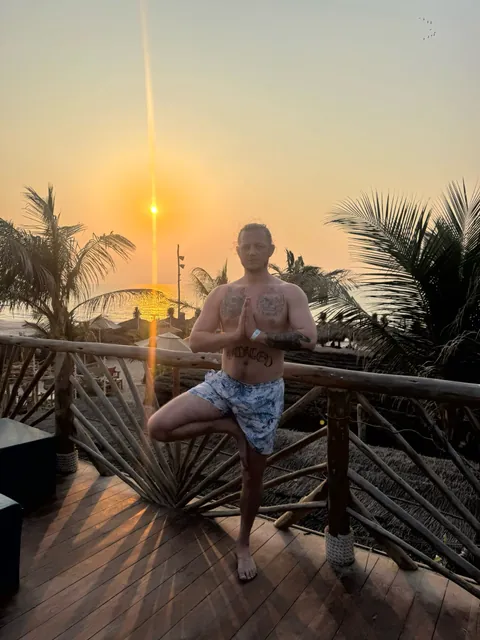
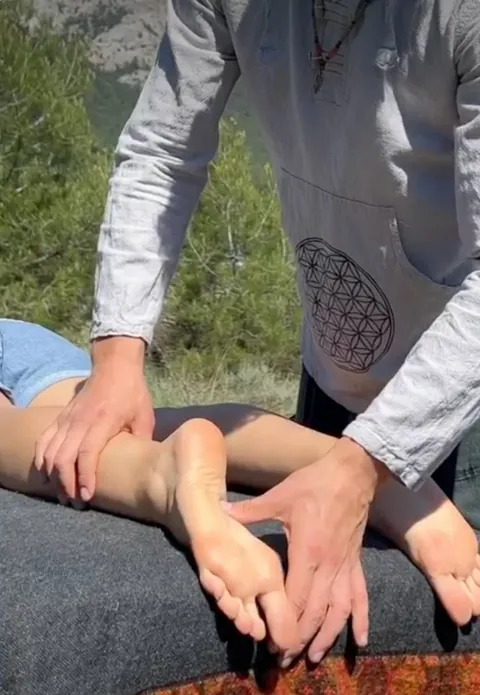
In photos
The photos in this section are real photos of me and my work, not AI images.
Why this project exists
Good & Steady asks how a useful idea can fit an ordinary week. A familiar meal, a window for movement or an evening preparation can provide a concrete starting point.
Pavel's aim for the project is to make that next step easier to choose and easier to use. The guides offer context; the tools give an idea a place in the week.
Small enough to fit real life
Work, family and changing days belong in the plan. My Week therefore offers smaller options and ways to adjust the schedule. Keep what helps, reduce what no longer fits and decide what to carry into the next week.
What Pavel is responsible for
Pavel Rachkouski is Founder & Editor of Good & Steady. He is responsible for project direction, the editorial system and the practical usefulness of the materials.
That includes choosing useful topics, connecting guides to practical tools, arranging the source checks each article requires and addressing errors in published material. A page’s preparation record identifies who performed a check and which version it covered.
Sources and corrections
A published guide should make its author or publisher and supporting sources visible. Its preparation note distinguishes disclosed AI assistance from human work recorded for that version. Evidence, limits and practical suggestions should remain recognisable; specialist credit belongs only to contributions that actually occurred.
Send Pavel the page and statement if something needs clarification or correction. The corrections policy explains how a concern is checked and how a substantive change is made visible.
Pavel's role is editorial and product focused. Good & Steady offers general information, not individual medical care. Read the scope of the site.
Published work
Browse guides credited to Pavel
This list includes guides carrying Pavel’s author credit. Other published collections are available in All guides.
- How to Ask for Practical Help When You Care for Someone
- Questions to Prepare Before a Health Appointment
- How to Read a Longevity Headline
- How to Read a Nutrition Label Without Overthinking It
- Accessibility Questions to Ask Before Joining an Activity
- How to Compare Grocery Unit Prices Without Buying More Than You Need
- Places to Walk Indoors for Free: Check the Local Rules First
- A Pantry Inventory Before Shopping: Check What You Already Have
- Screen-Free Activities for Adults: Choose Something That Fits Today
- A Shared Bedroom Checklist for Different Evening Routines
- A Household Chore Chart for Adults: Agree Who Does What and When
- A Walking Route Checklist for an Ordinary Week
- How to Stop Checking Work Email After Hours: Agree on the Next Check
- Work Notification Boundaries: Decide What Can Wait
- Free and Low-Cost Adult Classes: Where to Look and What to Check
- A Bedroom Light and Noise Check: Small Changes to Consider
- Build Your Own Bedtime Checklist: Simple Evening Habits
- What Counts as Physical Activity? Everyday Examples Beyond Workouts
- How to Find a Walking Group That Fits Your Pace and Schedule
- Your First Yoga Class: What to Bring and What to Ask
- How to Plan Healthy Habits When Your Schedule Keeps Changing
- Freezer Inventory: A Simple System for Using What You Already Have
- Live vs. Recorded Online Yoga Classes: A Beginner's Comparison
- Meal Planning When You Hate Cooking: A Mix-and-Match Shopping Guide
- Phone-Free Work Breaks: Simple Ideas for Different Workdays
- Keep Your Phone Out of Bed: A Setup Checklist for Calls and Alarms
- How to Prioritize a To-Do List When Everything Feels Important
- Questions to Ask a Personal Trainer Before Your First Session
- A Weekly Habit Tracker Without Streaks or Resetting to Zero
Try the idea for yourself
Choose one focus and make a little room for it this week.
Build My Week