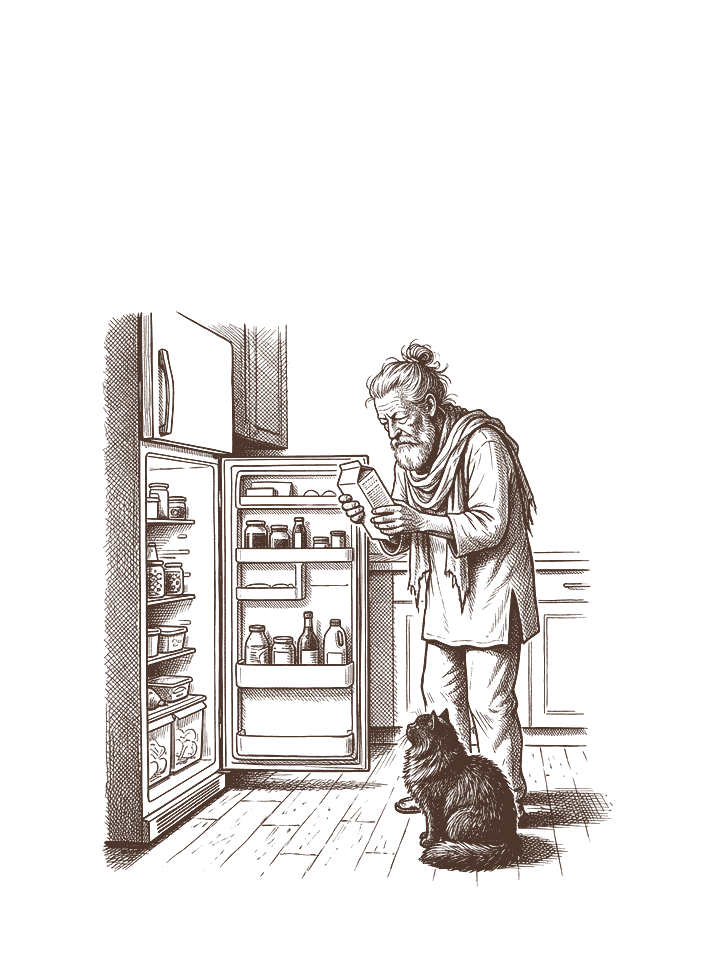
In the U.S., the words beside a food date matter. “Best if used by” concerns quality, and “sell by” is the date by which a manufacturer recommends store sale; neither phrase on its own tells you how long your household can safely keep the food. Infant formula is the exception — follow its use-by instructions. Storage, opening and handling still matter.
A food date looks precise, but its meaning depends on the words beside it. A quality date, a store-sale date, and an opening date answer different questions. Reading them separately helps explain what the package tells you and what still depends on storage.
Start with the date phrase
The FDA food-dating guidance distinguishes quality dating from food safety. “Best if used by” concerns quality. The Washington agriculture manual defines “sell-by” as the date by which a manufacturer recommends store sale. Neither phrase, on its own, establishes how long your household can safely keep that food.
This guide concerns U.S. labeling. Wording can differ between products and jurisdictions. The first question is therefore what this particular label says, rather than whether all dates mean the same thing.
Add the storage history
Purchase, opening, and cooking are separate events. For example, a printed date on unopened yogurt does not replace the manufacturer's instructions after opening. Writing down the opening date can help you follow those instructions.
A date that has not passed tells you nothing about an unknown storage temperature. Damage, handling, and product-specific storage instructions still matter. The quality distinction also does not mean every food remains safe indefinitely after its date.
Infant formula is a specific exception to broad advice about quality dates; follow its use-by instructions. Never taste an uncertain food as a safety test.
Read one package all the way through
This worksheet keeps the date beside the information needed to interpret it. It cannot calculate a safe extension beyond that date.
| What to read | Your package |
|---|---|
| Product and exact date phrase | ___ |
| Printed date | ___ |
| Opened or unopened | ___ |
| Storage instruction | ___ |
| Opening or preparation date, if relevant | ___ |
| Unresolved question for the manufacturer | ___ |
An unanswered storage question remains unanswered even when the printed date looks reassuring. The manufacturer can clarify its instructions; the label cannot reconstruct how a particular package was handled.
Give leftovers their own record
A cooked meal needs its own storage and reheating decisions. The unopened ingredient's date does not become the finished dish's safe storage period. Good & Steady's leftovers guide covers that separate question.
Once you have read the phrase, storage instructions, and opening information together, you can see what is still missing. That is a more useful basis for the next question than treating a date as a safety verdict.
Frequently asked questions
Does a sell-by date mean the food has expired?
Not on its own. A “sell by” date is the date by which the manufacturer recommends the store sells the product. On its own it does not tell you how long your household can safely keep the food; storage, opening and handling still matter, so follow the product’s storage instructions.
Is it safe to eat food after the best-by date?
The date alone does not tell you: “best if used by” concerns quality, and safety also depends on storage, handling and product instructions. FDA advises examining food past its “best if used by” date for signs of spoilage; never taste an uncertain food as a safety test.
Are food date labels required by federal law in the U.S.?
FDA’s food-dating guidance, linked on this page, says that except for infant formula, manufacturers are not required by federal law or regulation to place quality-based date labels on packaged food.
What does “sell by” mean for me?
It is the date by which the manufacturer recommends store sale. After you buy the food, follow its storage instructions, including any instructions after opening.