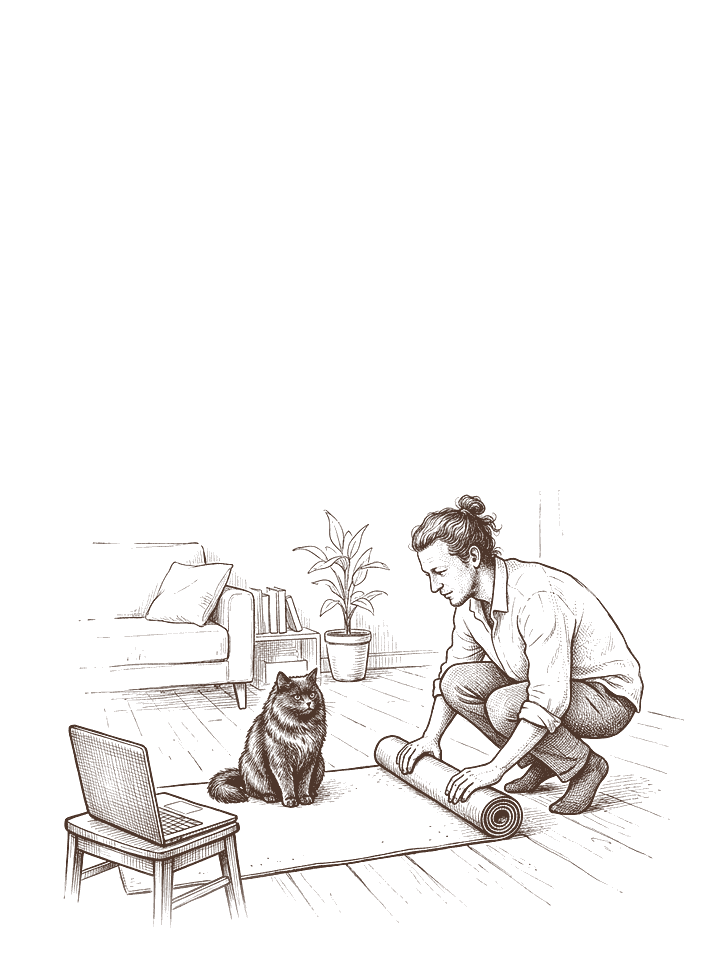
To start yoga at home as a beginner, choose one complete beginner lesson rather than assembling individual poses yourself. Look for a lesson that names its audience, instructor, equipment and expected experience, and preview it for floor work, standing sections and transitions. A “beginner” label does not guarantee suitability; discuss condition-specific questions with an appropriate professional, as NCCIH advises.
A pose card explains a position. A complete yoga lesson also needs to explain what happens before and after it. For home practice, those connections matter: setup, transitions, options, and an ending you can follow. This checklist helps evaluate the lesson before trying to assemble a sequence yourself.
A personal starting point
The first yoga pose Artur showed me felt fairly easy. We practiced together, and I followed his simple movements. Lotus remains difficult for me. That personal experience does not establish which positions will suit another beginner.
Choose instruction you can follow
NCCIH's yoga guidance explains that styles have different demands and that individual circumstances matter. A “beginner” label does not describe every position or guarantee suitability. Look for a lesson that names its audience, equipment, expected experience, and instructor.
The British Wheel of Yoga's introductory guidance discusses finding instruction and preparing for practice. Those questions help evaluate instruction. They cannot establish that a recording fits an individual medical condition.
Check the whole lesson before starting
Preview enough to identify floor work, transitions, standing sections, and equipment. A pose demonstration may explain one position while omitting how to enter, leave, or connect it to another. Keep Good & Steady's pose cards as reference material rather than a substitute for a coherent lesson.
| Check | What you want to know |
|---|---|
| Starting level | Does the lesson explain movements to newcomers? |
| Space | Can the described movements fit without obstacles? |
| Equipment | What is required, and are alternatives actually demonstrated? |
| Transitions | Are position changes explained rather than skipped? |
| Options | Can you pause, observe, or leave out an activity? |
| Ending | Does the recording include the complete finish? |
Set up for an ordinary session
Place the device where you can follow instructions without repeatedly twisting to see it. Clear the space first. Keep required supports within reach, using the lesson's actual instructions. Do not improvise stacked furniture or substitute props solely because they look similar.
Keep the first decision small
You can preview a lesson and decide it does not fit. Purchasing equipment is not required to reach that decision. If a position hurts or an instruction feels distressing, stop rather than trying to keep pace. Discuss condition-specific questions with an appropriate professional, as NCCIH advises.
Keep the lesson's link, equipment list, and any unanswered questions together. A preview that reveals a poor fit is still useful; it saves you from guessing through an unsuitable sequence.
Frequently asked questions
Can I learn yoga from pose cards?
A pose card explains one position, and a demonstration may omit how to enter, leave or connect it. A complete lesson also explains setup, transitions, options and an ending you can follow.
What should I check in an online yoga lesson?
Who it is for, who teaches it, what equipment is needed and what experience it expects; then preview it for floor work, transitions, standing sections and a complete ending.
Is a beginner yoga lesson suitable for everyone?
NCCIH explains that styles have different demands and that individual circumstances matter. A beginner label does not guarantee suitability, and a recording cannot establish that it fits an individual medical condition. If a position hurts, stop.