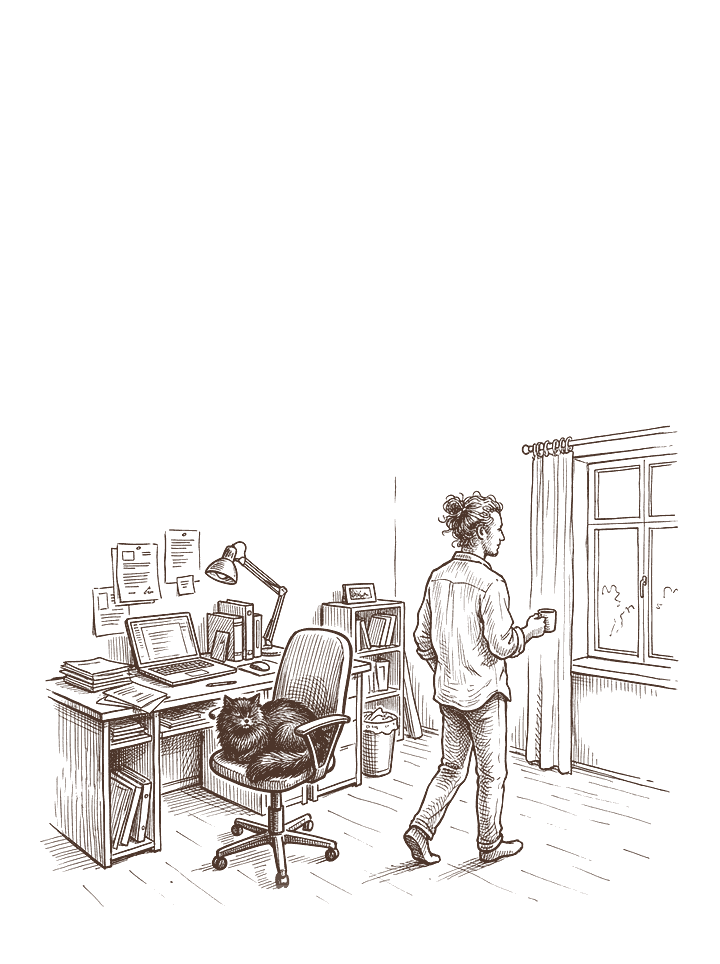
A gap between meetings and a movement break are different things. The gap creates an opportunity; what you do with it depends on the work, setting, and your abilities. A practical break can be simple, without becoming a timed exercise routine.
Separate movement from a meeting gap
The CDC activity overview encourages moving more and sitting less. It does not establish one compulsory break duration for every desk worker. A reminder can mark an opportunity, but it cannot resolve a staffing constraint or choose an appropriate movement.
Use something already familiar
For example, walk to an accessible shared area, collect an item, or step away from the desk where practical. If standing or walking is unavailable, an accessible task change can still provide a pause. A movement already taught to you may be another option. Task changes alone should not be counted as physical activity. These examples organize a workday; they do not offer treatment for pain or circulation problems.
Check the setting
Leave enough space around furniture and equipment. Consider footwear, confidential work, and responsibilities that cannot be left unattended. Do not use a rolling office chair as exercise support. A new exercise needs clear instructions. A short video cannot assess whether it fits your circumstances.
| Workday situation | Practical option | Boundary |
|---|---|---|
| Gap before a meeting | Step away along a familiar accessible route | Return without rushing |
| Shared workstation | Agree when you can leave | Maintain required coverage |
| Movement restricted today | Change the task or use an already suitable option | No improvised therapeutic exercise |
| No clear gap | Ask about workable breaks | A personal reminder cannot resolve staffing |
Record one useful adjustment
Write: “A workable opportunity is ___; the ordinary action is ___; the obstacle to discuss is ___.” You can revise that note when meetings or duties change. The NIDDK habit guidance supports planning around obstacles. This worksheet applies that idea without claiming a measured health effect.
Pain or unusual symptoms need appropriate advice. Do not keep repeating a movement because it appears on a break checklist. Keep the action small enough to fit the actual workday. If the obstacle is organizational, discuss the obstacle itself. A missed break does not create a make-up exercise requirement.