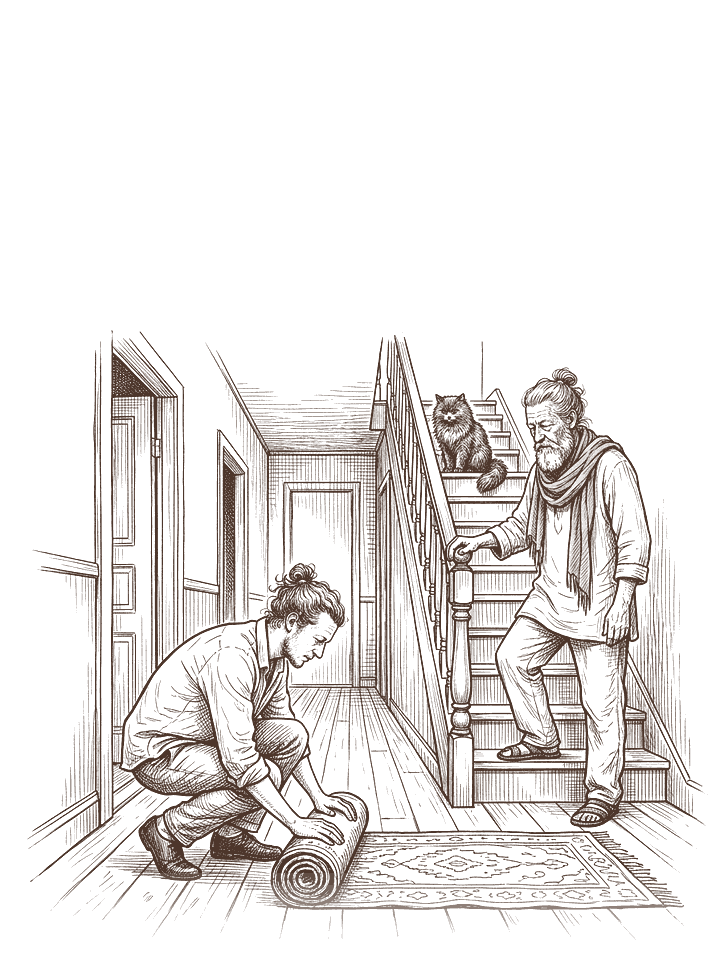
Preventing falls at home means looking at more than the floor: CDC’s falls guidance brings together medicines, vision, strength, balance and home conditions. Agree an ordinary rearrangement for a hazard such as a cable across a doorway, and take a concern about dizziness or medicine timing to a prescriber or pharmacist. Do not stop prescribed treatment yourself because a label mentions dizziness. Arrange appropriate eye care for a change in vision, and discuss suitable assessment and training when a task feels less steady. A Cochrane review found that exercise reduces falls among older people living in the community, with balance and functional exercises as important components. Tell the healthcare professional about any previous fall.
A clear floor addresses a visible hazard, but fall prevention also involves less visible questions. Medicines, vision, strength, and balance may belong in the same conversation. Separating those issues helps you identify which household changes are straightforward and which need individual assessment.
Give different problems different next steps
CDC's falls guidance brings together medicines, vision, strength, balance, and home conditions. Moving a loose rug addresses that rug; it does not resolve a concern about dizziness or medication. Do not stop prescribed treatment yourself because a label mentions dizziness. Take the medicine question to a prescriber or pharmacist.
The same distinction applies to movement. Noticing that a familiar task feels less steady is information to discuss, rather than a reason to test your limits.
Read the exercise finding at its actual scope
A Cochrane review found that exercise reduces falls among older people living in the community. Balance and functional exercises were important components. Evidence about walking alone was uncertain.
The population and outcome are essential parts of that finding. It does not establish that any activity prevents falls for everyone, or select exercises for an individual reader. A personal exercise choice needs its own assessment when relevant limitations or concerns are present.
Organize what you already notice
This table keeps observations connected to an appropriate next step. It does not produce a falls score or clear someone for exercise.
| Area | Observation to bring | Appropriate next step |
|---|---|---|
| Home route | A cable crosses a doorway | Agree an ordinary rearrangement |
| Medicines | A concern about dizziness or timing | Ask the prescriber or pharmacist |
| Vision | A change affecting ordinary tasks | Arrange appropriate eye care |
| Movement | A task feels less steady | Discuss suitable assessment and training |
| Previous fall | What happened and when | Tell the healthcare professional |
A previous fall belongs in the discussion even if the visible household issue has already been addressed. Describe what happened and when, without using the table to decide the cause.
Keep the walkthrough ordinary
Do not walk deliberately in darkness, climb furniture, or challenge your balance to gather information. Use observations from ordinary life. CDC's home checklist provides prompts about routes, stairs, lighting, and frequently used items.
A household repair and a clinical assessment remain separate tasks. For each unresolved issue, name the next action and who can help with it. The resulting list should make those jobs clearer without declaring a home or person “fall-proof.”
Frequently asked questions
What exercises help prevent falls in older adults?
A Cochrane review found balance and functional exercises were important components of exercise that reduced falls in community-dwelling older people; evidence about walking alone was uncertain. A personal exercise choice needs its own assessment.
Can medicines increase the risk of falling?
A concern about dizziness or medicine timing belongs with your prescriber or pharmacist. Do not stop prescribed treatment yourself because a label mentions dizziness.
Is there a home safety checklist for falls?
CDC’s home checklist, linked on this page, gives prompts about routes, stairs, lighting and frequently used items. Use observations from ordinary life; do not walk in darkness or challenge your balance to gather information.