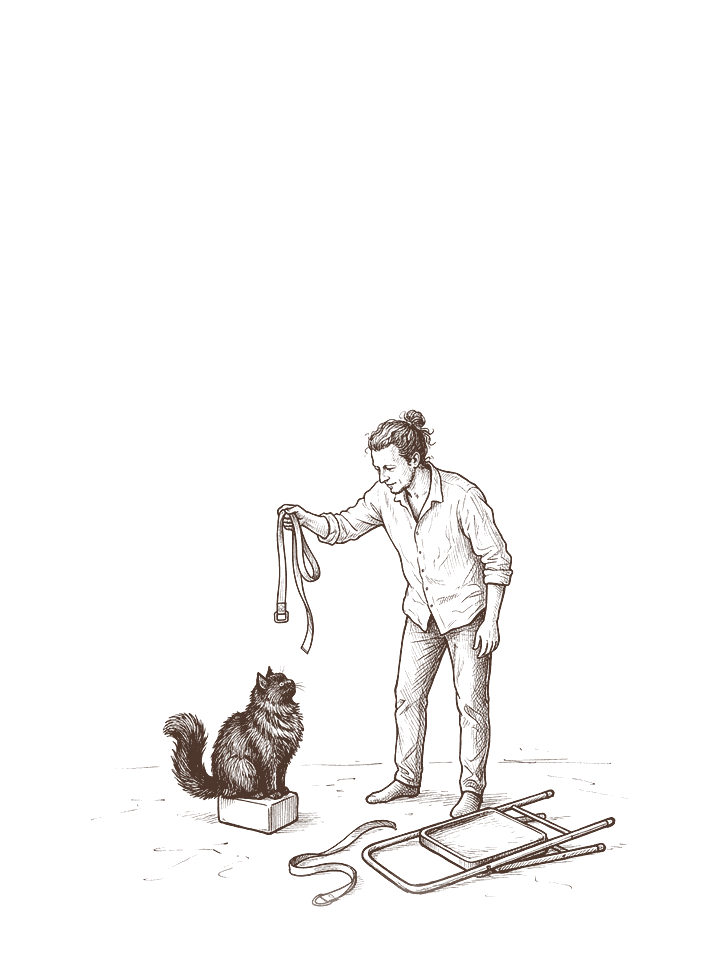
Yoga blocks, straps and chairs support a position a lesson describes: a support may bring a surface closer or help maintain the position, and its purpose depends on the specific instruction. Ask which height, surface and position a block needs, where a strap goes and how much tension is intended, and which chair and placement the teacher demonstrates. Before buying, ask whether the class supplies equipment or whether a suitable item can be borrowed.
The name of a yoga prop tells you less than the instruction that uses it. A block's position, a strap's tension, or a chair's stability can matter more than owning the item. Start with the demonstrated setup, then decide what equipment it requires.
Understand the role of the prop
Different yoga styles use equipment differently. The USC style guide describes props within Iyengar yoga and supported positions in restorative practice. The Iyengar method's own description explains its teaching approach. It is not independent proof of every claimed health benefit.
A support may bring a surface closer or help maintain a described position. Its purpose depends on the specific instruction. A prop does not automatically make a position easier or suitable for everyone.
Ask before substituting
A firm yoga block differs from a soft cushion. A chair must match the stability and positioning the lesson requires. A belt or improvised support may differ from the strap being demonstrated. If the lesson does not explain alternatives, ask the teacher instead of guessing from appearance.
| Prop | Question before use | What not to assume |
|---|---|---|
| Block | Which height, surface, and position does this instruction require? | Any stacked object is equivalent |
| Strap | Where should it go, and how much tension is intended? | Pulling harder improves the position |
| Chair | Which chair and placement does the teacher demonstrate? | A rolling or folding chair will work |
| Cushion or blanket | What support is intended here? | Softness guarantees suitability |
Buy only after confirming the need
Ask whether the class supplies equipment or whether a suitable item can be borrowed. The British Wheel of Yoga discusses getting started without assuming every newcomer needs a full equipment collection. Check storage and transport too. A large support is only useful if it fits the actual setting.
Stop guessing when instructions are unclear
Pause and ask for clarification if a prop slips, feels unstable, or changes the movement unexpectedly. For individual health questions, follow NCCIH's advice to discuss circumstances with appropriate professionals. Write down the demonstrated prop, placement, and any questions before buying a substitute. That ties the equipment decision to the lesson instead of letting the shopping list choose the practice.
Frequently asked questions
Do beginners need yoga props?
Not necessarily. Ask whether the class supplies equipment or whether a suitable item can be borrowed; the British Wheel of Yoga discusses getting started without assuming every newcomer needs a full equipment collection.
Can I use a cushion or a belt instead of a block or strap?
A firm yoga block differs from a soft cushion, and a belt or improvised support may differ from the strap being demonstrated. If the lesson does not explain alternatives, ask the teacher instead of guessing from appearance.
Should I pull harder on a yoga strap?
Do not assume that pulling harder improves the position. Ask where the strap should go and how much tension is intended, and pause to ask if a prop slips or feels unstable.
What kind of chair is used for chair yoga?
The chair and placement the teacher demonstrates. Do not assume a rolling or folding chair will work; a chair must match the stability and positioning the lesson requires.