Iyengar yoga is a named school with a defined teaching tradition. It is known for close attention to postures, deliberate sequencing, timing and the use of props. Those features work together: a teacher may change the support, explanation or duration to make a particular aspect of a posture clearer. Iyengar Yoga UK identifies these as characteristic elements of the method. Iyengar Yoga UK class guide
Yoga · History & class formats
Iyengar yoga and its detailed approach to learning
Prepared by Good & Steady · Sources checked
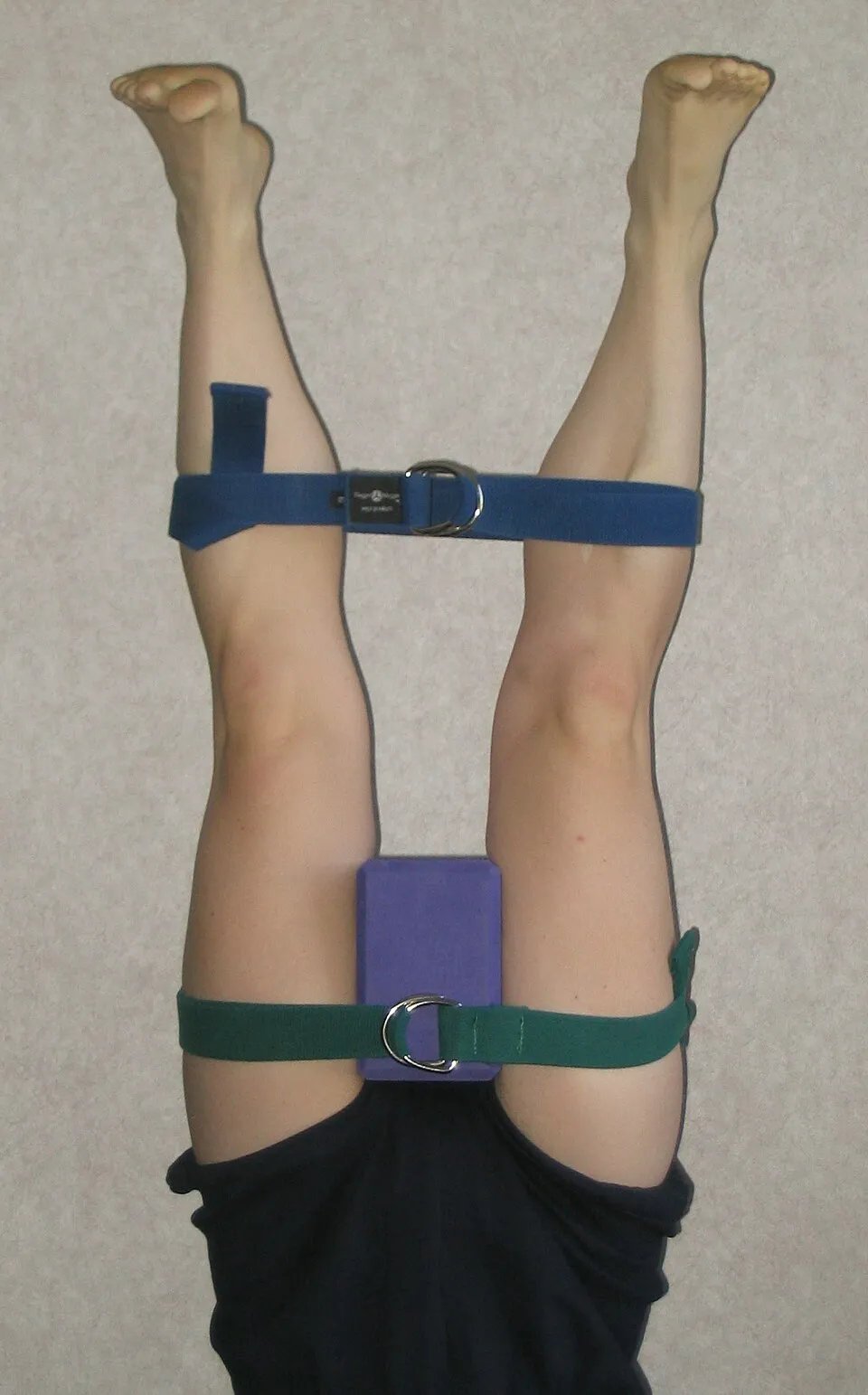
A detail photographed in an Iyengar yoga setup: belts and a block help position the legs. The complete setup is outside the frame.
Legs constained Iyengaar Yoga.jpg — User:Quadell. CC BY-SA 3.0. WebP conversion and proportional resizing; no crop or retouching.

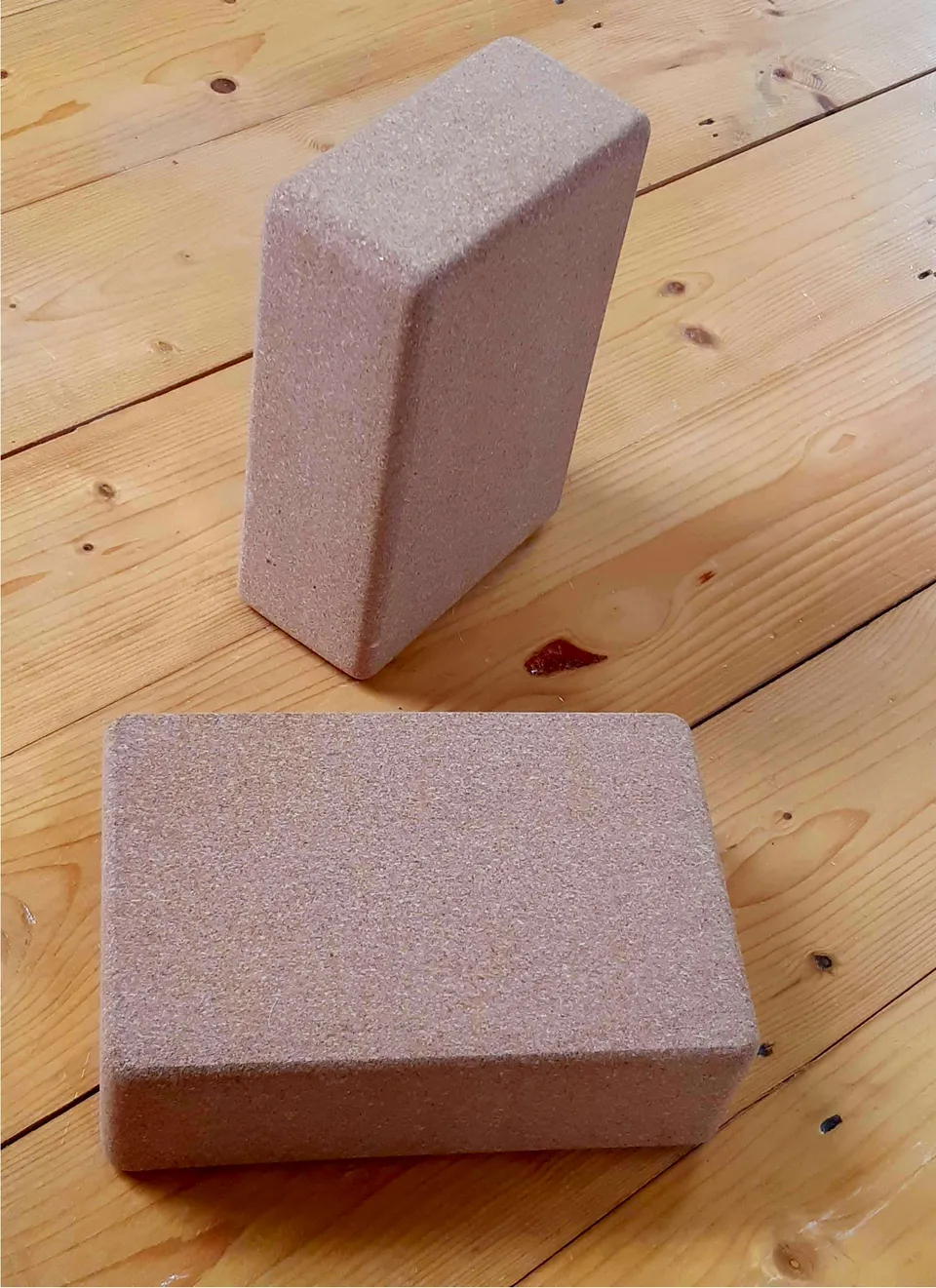
Cork blocks, one kind of prop used in Iyengar and many other yoga classes. Props alone do not identify a school.
Cork yoga blocks.jpg — Ian Alexander. CC BY-SA 4.0. WebP conversion and proportional resizing; no crop or retouching.

Where the school comes from
B.K.S. Iyengar developed the approach during the twentieth century after studying with his brother-in-law, T. Krishnamacharya. He began teaching in Pune in 1937. Newcombe, research on the development of Iyengar yoga
His book Light on Yoga appeared in the mid-1960s; scholars distinguish a British edition dated 1965 from its American publication in 1966. Black, Yoga by the book, note 1 The Ramamani Iyengar Memorial Yoga Institute opened in Pune in 1975. These are milestones in a method that developed over decades, rather than a single founding moment. Jain, Branding yoga IYNAUS biography
The school’s subsequent development includes the work of Iyengar’s family. Its national associations support teaching, assessment and continued study. Iyengar Yoga UK describes its philosophical foundation in Patanjali’s Yoga Sutras, so its close attention to posture sits within a broader understanding of yoga. Iyengar Yoga UK
That background matters when comparing class names. “Alignment-focused” can describe teaching in many settings. “Iyengar yoga” points to a particular school and its teacher-education system.
What a class commonly looks like
Expect detailed verbal instructions and demonstrations. A teacher may ask students to watch before trying a posture, then return to it with a different emphasis. Iyengar Yoga Australia describes demonstration and attention to the student’s own capacity as features of its classes. Iyengar Yoga Australia
The teacher selects a sequence for the session and introduces beginners to the work progressively. Holds, repetitions and pauses for explanation make room to examine the postures. The pace of transitions does not tell you how much effort or attention a session will ask for. Iyengar Yoga UK class guide
The precise experience also depends on the class level and teacher. A beginners’ course, a general class and a session for established practitioners should not be treated as interchangeable simply because all three use the Iyengar name.
Why props are prominent
Blocks, belts, blankets, bolsters and chairs are familiar parts of the school’s practice. The national association’s account of Iyengar’s work highlights his development and use of such equipment. Props can change the support or arrangement of a posture and give the teacher another way to explain it. IYNAUS biography
Their presence does not tell you that a class will be passive. Ask what the teacher is exploring with a particular setup and whether you will be shown how to arrange it. For an online class especially, find out whether the teaching assumes access to particular equipment; the answers will be more useful than a generic list of yoga accessories.
Questions worth asking
- Is this a beginners’ course or a general class with assumed experience?
- Are you a currently certified Iyengar teacher, and where can I check that?
- How do you introduce unfamiliar prop setups and offer alternatives?
- Does this class include pranayama, and what preparation does it assume?
Certification has a specific meaning here. IYNAUS describes assessment of practice, written knowledge and teaching, followed by ongoing education. It is a verifiable qualification, rather than a description to infer from a teacher’s use of blocks or precise instructions. IYNAUS certification
The Good & Steady pose library offers individual pose references. An Iyengar teacher’s sequence, explanations and prop arrangements provide additional context that a pose collection alone cannot supply.