Restorative yoga is organized around supported positions and time to remain in them. In the approach associated with Judith Hanson Lasater, props carry the body in gentle shapes, and the emphasis is on resting rather than seeking a stretch. Her teaching directory describes silence and stillness as central features. That is a useful starting point, although individual studios may use the word “restorative” more broadly. Restorative Yoga Teachers: What is Restorative Yoga?
Yoga · History & class formats
Restorative yoga and supported rest
Prepared by Good & Steady · Sources checked
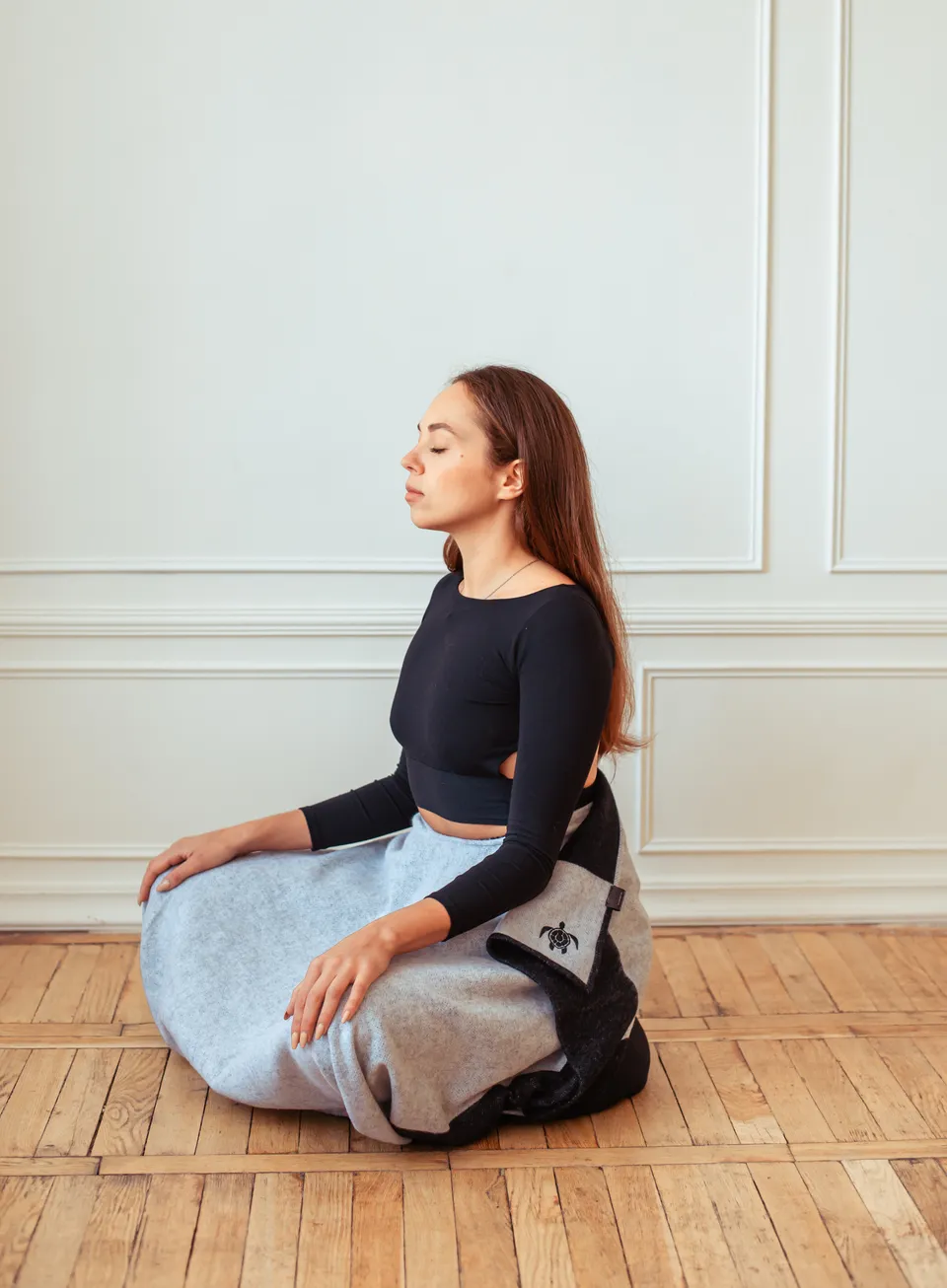
A blanket used across the lap: illustrative comfort-prop context, not a documented restorative sequence.
TET 0420.jpg — Stillandsteady. CC BY-SA 4.0. WebP conversion and proportional resizing; no crop or retouching.

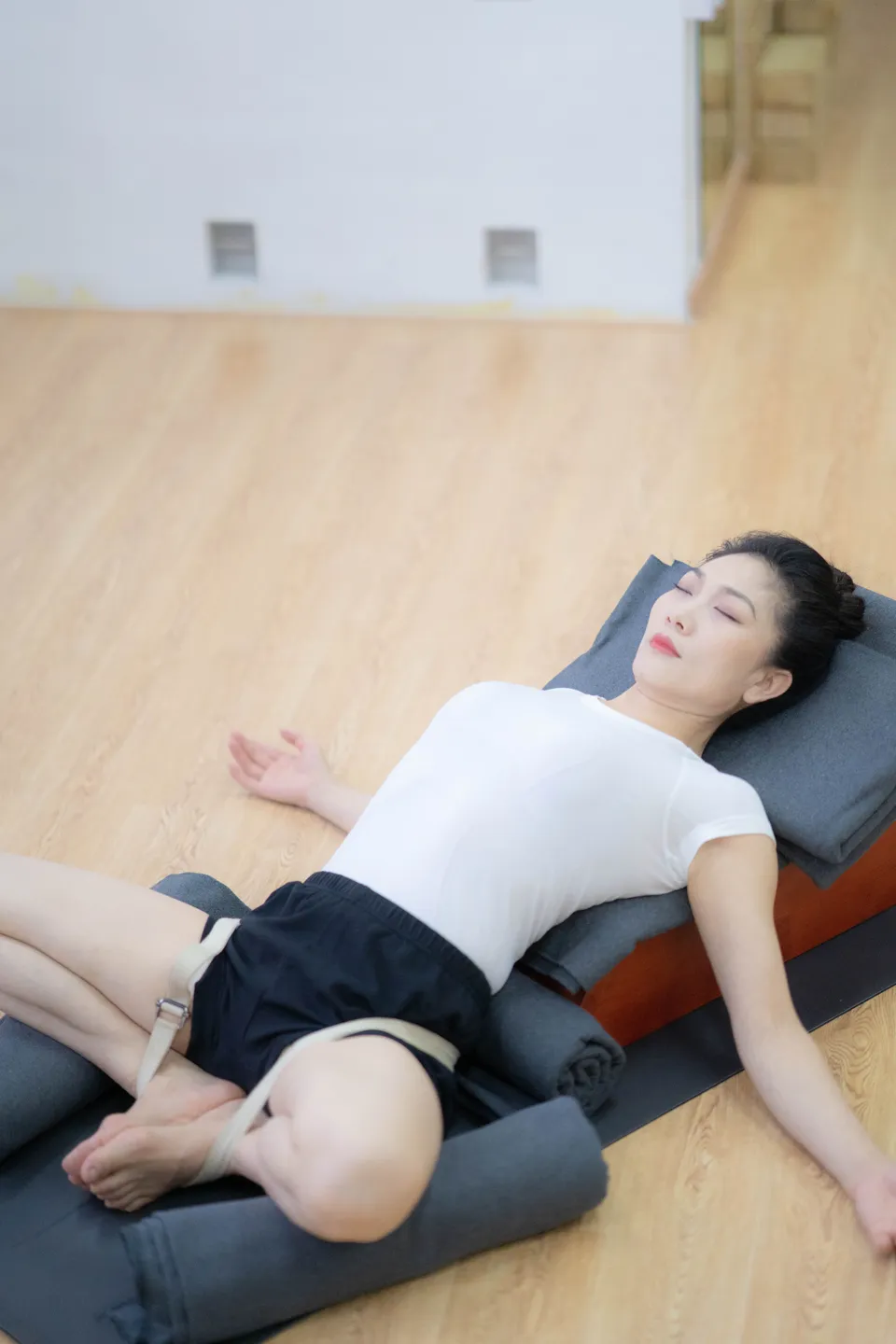
A supported reclined posture with cushions and bolsters. The picture illustrates support rather than prescribing a setup.
Woman Practicing Yoga — Nicholas Fu. Pexels License (checked 2026-10-16). WebP conversion and proportional resizing; no crop or retouching.
A modern teaching approach with identifiable influences
Lasater is an important figure in the development and dissemination of modern Restorative yoga. In a published interview, she traces her use of props to studying with B. K. S. Iyengar, recalling their introduction to her teaching world in the 1970s. This is her first-person account of an influence, rather than independent evidence that one person invented every form of supported rest. Judith Hanson Lasater: Interview on the origins of Restorative yoga
Iyengar Yoga UK also describes restorative and recuperative practice within its own tradition, including supported postures that can appear in a larger class. The overlap matters, but the names are not identical: an Iyengar restorative session and a Lasater-inspired Restorative session may have different structures and expectations. Neither description requires an assertion that today’s studio format is an unchanged ancient system. Iyengar Yoga UK: Restorative yoga
What happens in the room
Different arrangements can serve as the substance of the practice. Lasater.Yoga’s Deep Rest curriculum includes side-lying, basic, and other supported versions of Savasana, with tutorials on prop configurations. The familiar resting posture is therefore a starting point for variation rather than a single shape everyone must copy. The same course includes yoga nidra separately, illustrating how supported postures and guided meditation can share a program without being identical practices. Lasater.Yoga: Deep Rest curriculum
There is no single compulsory number of poses or minutes. Lasater’s Restorative Reset course, for example, centers on a twenty-minute Savasana practice. That illustrates how much of a session can be devoted to one position; it is not a rule for every class. Check the timetable description for both the full class length and the amount of guided movement before the resting portion. Lasater.Yoga: Restorative Reset
Props are central, not an afterthought
Bolsters, folded blankets, blocks, a strap, and sometimes a chair give the teacher different ways to arrange support. Lasater’s own equipment list also includes an eye bag and a sandbag. Different combinations change the arrangement of a position. Ask how the teacher decides when support is sufficient and how students can request a change during a quiet interval. Judith Hanson Lasater: Recommended props
It is worth asking how much silence to expect, whether eye coverings are optional, and whether alternatives to lying on the back are demonstrated. These questions get at the experience itself: how much guidance continues once the position is arranged, and how much choice remains during a long hold?
How it differs from neighboring classes
A slow pace alone does not make a practice Restorative. Yin yoga can involve sustained, intentional physical sensation; a gentle movement class may keep changing positions throughout. Restorative, in the Lasater sense, places supported rest at the centre. Some studios combine these formats, so “gentle,” “Yin,” and “Restorative” should prompt questions rather than serve as interchangeable labels. YinYoga.com: Yin practice principles, Restorative Yoga Teachers: Definition
Before booking, clarify how students can change position, request more support, or decline hands-on help. Ask whether the session involves floor transfers and whether seated alternatives are available. The goal of these questions is straightforward: to find out what participation will actually involve, without treating stillness as a test or expecting a particular feeling on demand.