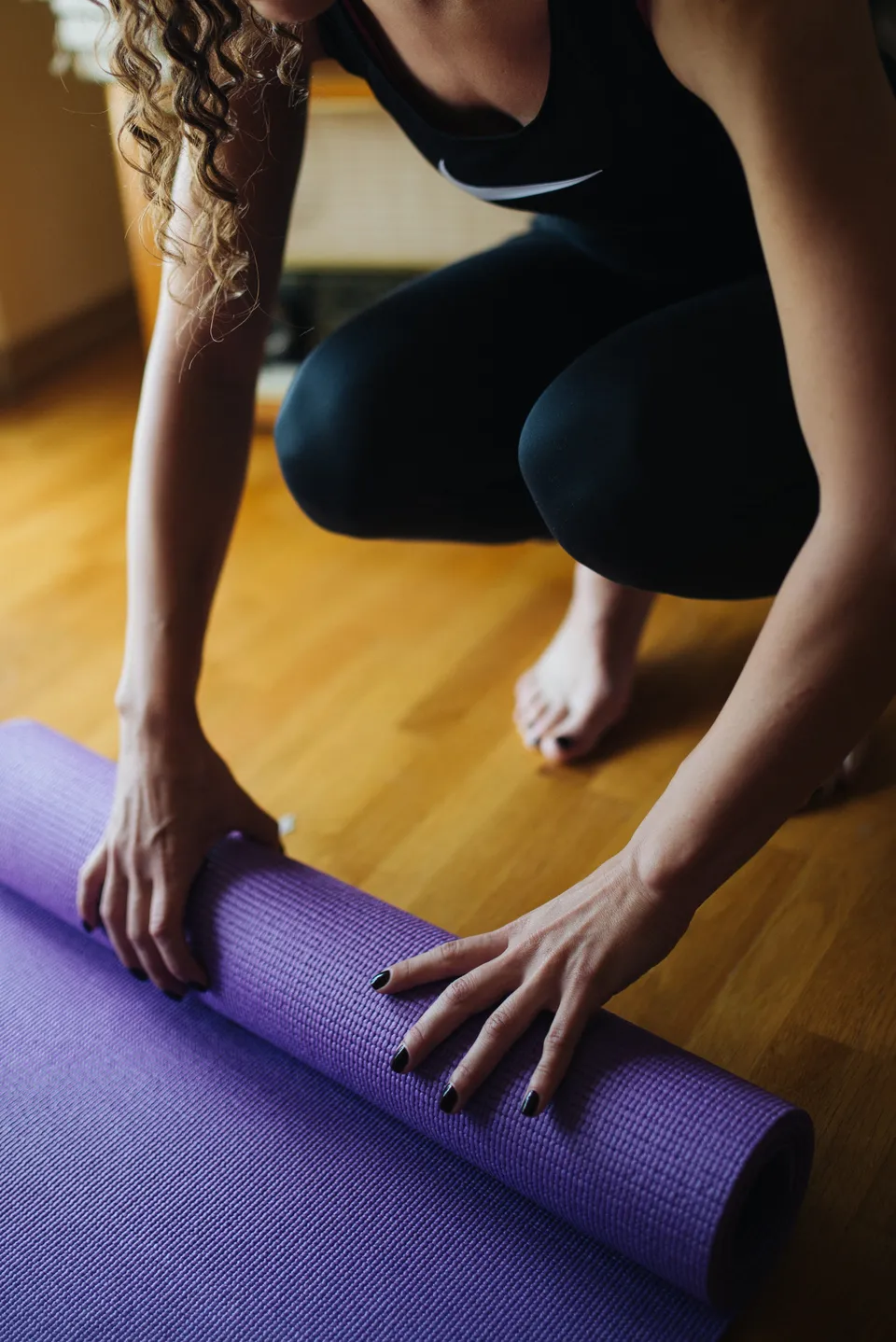
Vinyasa usually describes a way of organizing a class around movement and breath. Postures are connected into sequences, so the transitions matter as well as the shapes themselves. “Flow” is a common alternative label. Yoga Alliance uses the terms together in its contemporary class categories, although individual schools give them different emphases. Yoga Alliance on class descriptions
Treat Vinyasa as a broad format. The name alone does not specify a fixed sequence, a single founder or a standard level of difficulty.
An important part of its modern background is T. Krishnamacharya’s teaching in Mysore during the 1930s and 1940s. Historian Mark Singleton places that work within a changing culture of Indian and international physical practice, showing how it helped shape several influential modern yoga systems. This is a more careful account than treating every present-day flow class as an unchanged ancient sequence. Singleton, Yoga Body, chapter 9
The word also appears within particular lineages, including Ashtanga Vinyasa, where linking movements belong to a more specifically structured method. A class simply called Vinyasa may draw on such influences while allowing its teacher to choose and arrange the sequence. Contemporary schools continue to develop their own approaches: Kripalu, for example, explicitly teaches Vinyasa through its own methodology, including progressive sequencing and philosophical themes. Kripalu Vinyasa training description
What happens in class
You will commonly follow a teacher through connected postures, with verbal cues relating movement to breathing. Depending on the class, a sequence may be introduced slowly and then repeated more fluidly. Princeton’s Hatha Vinyasa description offers exactly that combination: first exploring individual postures, then linking them through repeated rounds. Princeton class descriptions
Other classes place greater emphasis on continuous movement, standing work or repeated sun salutations. USC describes its Vinyasa offering as dynamic and potentially demanding. That tells you something about its program, not every class carrying the label. USC yoga style guide
Pace is therefore worth checking directly. “Slow flow,” “foundations” and “power Vinyasa” point toward different experiences, but they still need explanation. Ask whether the teacher stops to demonstrate unfamiliar transitions or expects students to recognise the cues. A slower class may still include substantial time holding poses; a flowing class may offer plenty of pauses.
Sequence, props and variation
The appeal of the format may be the changing sequence, the repeated patterns or the attention given to transitions. Notice which of those matters to you. If you prefer learning one arrangement over several weeks, ask whether the class repeats material or changes substantially each time.
Props can be part of a flowing practice. Cornell’s Vinyasa description includes variations and makes props available. Ask how your teacher incorporates them during transitions, rather than assuming that a flow class requires everyone to use the same version. Cornell Vinyasa classes
Room heat, music and the amount of spoken philosophy are also details to check separately. “Vinyasa” does not answer those questions for you.
Questions worth asking
- Is this class taught for people still learning the transitions?
- How much demonstration is included before a sequence flows?
- Do sequences repeat, and are pauses and alternatives explained?
- How are props incorporated when the class is moving?
The Good & Steady pose library can help you recognise individual pose names. A Vinyasa class adds sequencing and transitions, so reading separate pose entries does not provide a complete flow to follow.