On a contemporary timetable, yoga nidra usually means a guided meditation in which the body remains relatively still while a teacher leads attention through a sequence. You might hear invitations to notice bodily sensations, observe the breath, or explore an intention. The exact content depends on the method. For example, the iRest Institute describes its own approach as guided meditation and publishes a ten-step framework. iRest Institute: Introductory practice, The ten-step iRest protocol
Yoga · History & class formats
Yoga nidra and the history of a guided practice
Prepared by Good & Steady · Sources checked
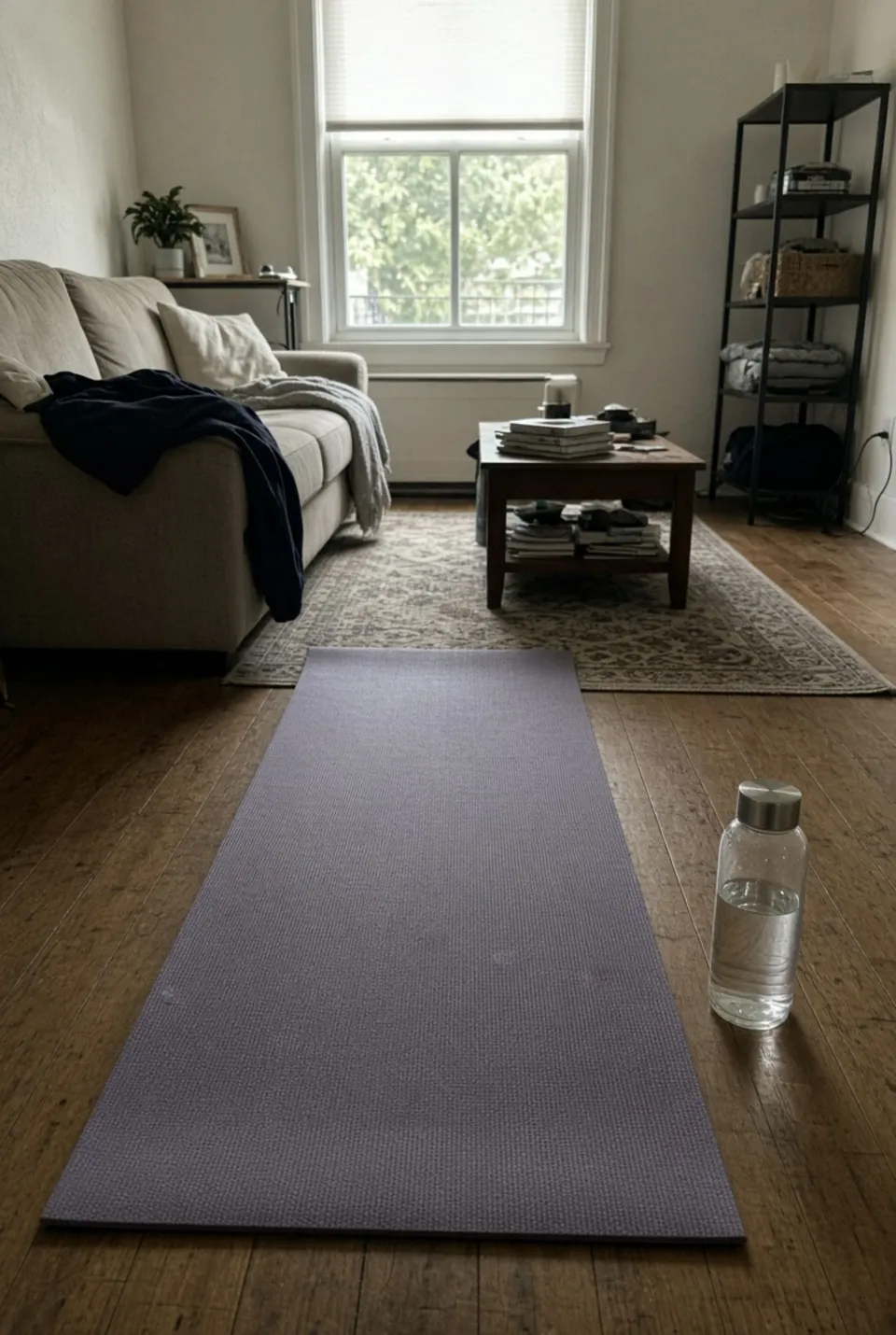
A home practice space, used only as context. Yoga nidra can be adapted to a supported position that is comfortable for the person.
Yoga mat and water bottle in a living room.jpg — Femivaco. CC BY 4.0. WebP conversion and proportional resizing; no crop or retouching.

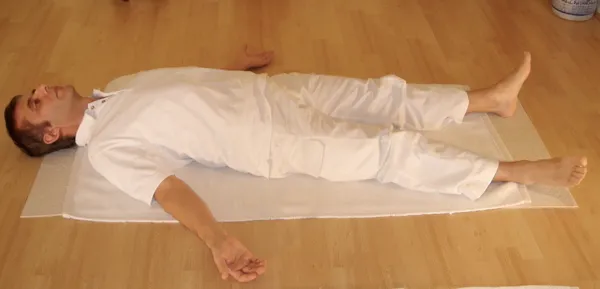
A photographed example of savasana. Lying down and yoga nidra are not the same thing; a still cannot show the guided practice.
Shavasana.jpg — Joseph RENGER. CC BY-SA 3.0. WebP conversion and proportional resizing; no crop or retouching.

The name has more than one history
The Sanskrit term yoganidrā has a much older and more varied history than today’s guided classes. Scholars Jason Birch and Jacqueline Hargreaves trace uses referring to divine sleep in epic and Purāṇic literature, meditative states in tantric sources, and profound absorption in medieval yoga texts. These references do not describe one continuous, standardized guided relaxation script. Birch and Hargreaves: Yoganidrā, history and context
The same study distinguishes those earlier meanings from Swami Satyananda Saraswati’s modern, structured technique, presented in his book Yoga Nidra, first published in 1976. The researchers identify precedents for some components while emphasising a distinctive modern systematisation. That supports a careful description: the term is ancient, while influential methods now taught under it have modern forms. It does not establish that a present-day recording reproduces an ancient sequence unchanged. Birch and Hargreaves: Precedents for the modern practice
Different methods, different invitations
The Bihar School’s description of Satyananda’s book emphasises remaining aware during relaxation and includes class transcriptions. It is a primary source for how that school presents its method, rather than independent historical verification of its wider claims. Bihar School of Yoga: Yoga Nidra
Richard Miller’s iRest is another identifiable modern approach. Its institute explicitly calls it a contemporary adaptation and describes a particular emphasis on investigating one’s present experience. Its published framework includes intention, an “inner resource,” body and breath awareness, and attention to feelings and thoughts. These details describe iRest; they should not be treated as compulsory ingredients of every yoga nidra class. iRest Institute: Yoga Nidra and iRest, The ten-step framework
What to expect in a session
The pace is usually determined by spoken guidance and pauses rather than changes of posture. Duration varies: the iRest Institute offers short sample practices and describes longer sessions of approximately thirty to forty minutes. A studio class may also reserve time for an introduction, questions, or movement before the meditation. Ask how much of the advertised session is the guided practice itself. iRest Institute: Practice formats
Setting up comfortably is part of the experience. The iRest Institute discusses pillows, bolsters, and alternatives to lying with the legs extended. Its introductory practice page explicitly allows sitting or lying down, with eyes open or closed. These examples demonstrate variation, not a universal requirement to lie flat. Ask how your teacher accommodates changes of position during the practice. iRest Institute: Position options, Try iRest: Introductory guidance
Questions worth asking
Ask which method the teacher uses and whether the session includes visualisation, personal intentions, religious language, music, or long silent intervals. Clarify whether eyes can remain open, positions can change, and a chair is available. For a recording, check its length and whether the speaker explains the ending clearly.
In contemporary classes, yoga nidra commonly refers to a guided contemplative practice. You do not need to treat the session as a test of whether you can achieve an unusual state. Knowing the teacher’s approach helps you choose with realistic expectations. The title alone does not tell you the script, setting, or experience you will have.