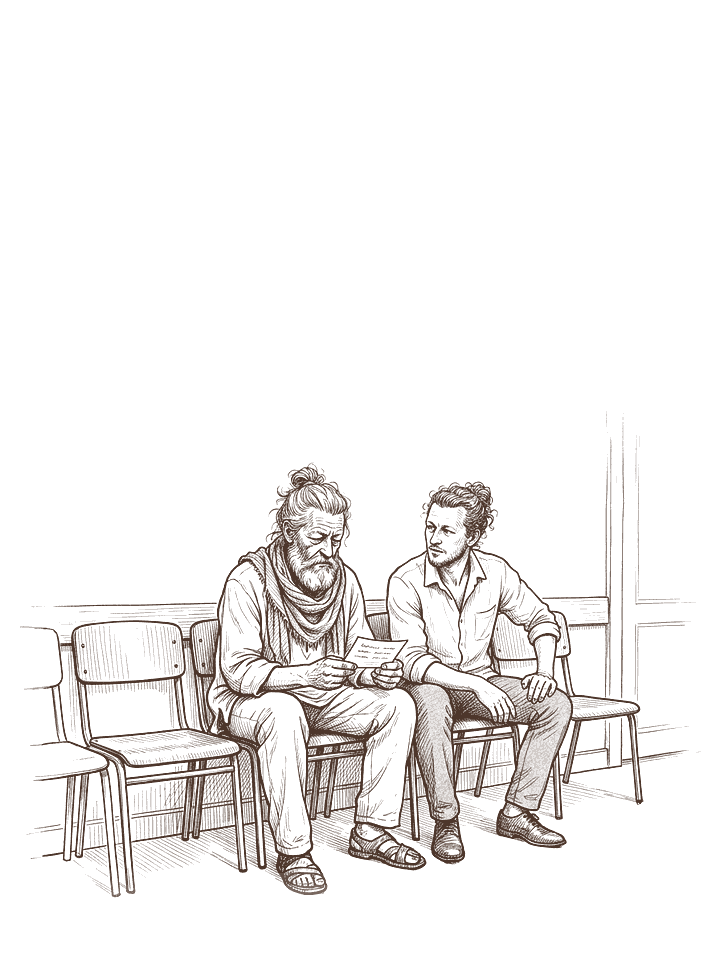
A healthcare conversation about sleep can begin when insufficient sleep affects daily activities, as NHLBI advises: for example concentration difficulties, unusual sleepiness or ordinary responsibilities becoming harder. A diagnosis is not an entry requirement, and clinical time periods are not instructions to wait. Bring the main difficulty, its approximate start and pattern, daytime effects, and your work schedule, medicines or other relevant changes. Mention breathing pauses and marked daytime sleepiness explicitly, and if you cannot safely stay awake for driving or hazardous work, address that immediate risk first.
A healthcare conversation about sleep can begin with its effect on everyday life. A diagnosis is not an entry requirement. The useful preparation is a description of the problem, including what happens during the day.
What a useful description includes
Difficulty falling asleep differs from waking repeatedly or waking much earlier than intended. These details give the conversation a starting point, alongside the approximate start and available sleep opportunity. The NHLBI diagnosis guide explains the questions and sleep records that can support assessment.
Daytime effects help explain why the problem matters. Examples include concentration difficulties, unusual sleepiness, or ordinary responsibilities becoming harder. Describing a change leaves its cause open for assessment. Guessing that stress, age, or a supplement caused it can obscure that uncertainty.
Why diagnostic timing is not a waiting rule
Clinical definitions help professionals classify sleep problems. They are not instructions to tolerate impairment for a set number of months. NHLBI advises discussing sleep when insufficient sleep affects daily activities. A short history can still deserve a conversation, especially when safety or functioning is affected.
Where sleep habits and treatment differ
A darker bedroom addresses light, while a bedtime checklist organizes tasks. Persistent insomnia raises a different question about assessment and treatment. NHLBI describes cognitive behavioral therapy for insomnia, called CBT-I, as usually the first treatment for long-term insomnia. CBT-I involves structured treatment components. The appointment sheet below does not deliver those components or provide instructions for restricting sleep.
A short appointment note
| Prompt | Your note |
|---|---|
| Main sleep difficulty | ___ |
| Approximate start and pattern | ___ |
| Effect on ordinary activities | ___ |
| Work schedule, medicines, or other relevant changes | ___ |
| First question | What might need assessment? |
| Second question | Which next step fits this problem? |
| Third question | When should we review the plan? |
The sheet organizes a conversation rather than scoring symptoms. An existing sleep record can accompany it. You do not need to buy a tracker or complete every box before booking.
Breathing pauses and marked daytime sleepiness deserve explicit mention. Do not assume they are simply part of insomnia. If you cannot safely stay awake for driving or hazardous work, address that immediate risk first. The note has done its job when it helps explain the difficulty and establish an agreed next step.
From Pavel’s experience
Personal experience — Pavel Rachkouski, founder. One person’s notes, not advice.
I have never gone to a doctor about my sleep myself.
I have had insomnia. There were nights I couldn’t sleep and went out walking, around Dubai, around Turkey. When I move and get used to a new place, at some point, about two weeks in, it starts. Nothing helped. Time helped: acclimatisation. I got used to the place, and everything was fine. You get tired, worn out, you don’t sleep, and then it knocks you out anyway, whether you want it to or not. And about once a year I sleep badly for two or three days in a row (more on after a bad night). I didn’t go to a doctor about any of it.
This is one person’s experience, not a rule: the page above explains why there is no waiting period you have to sit out.
Frequently asked questions
How long should I have insomnia before seeing a doctor?
There is no waiting rule. Clinical definitions help professionals classify sleep problems; they are not instructions to tolerate impairment for a set number of months. If you cannot safely stay awake for driving or hazardous work, address that immediate risk first.
What is the first treatment for long-term insomnia?
NHLBI describes cognitive behavioral therapy for insomnia (CBT-I) as usually the first treatment for long-term insomnia. This page does not deliver its components.
What should I bring to a sleep appointment?
A note on the main sleep difficulty, its approximate start and pattern, the effect on ordinary activities, and your work schedule, medicines or other relevant changes. Mention breathing pauses and marked daytime sleepiness explicitly.