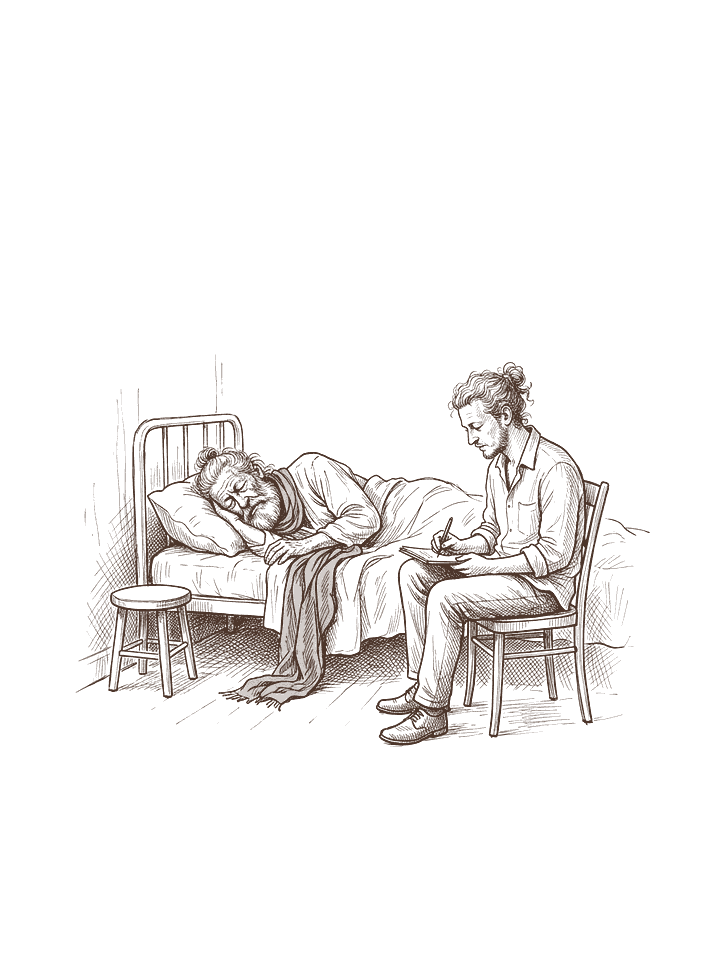
Snoring alone does not establish sleep apnea. Repeated breathing pauses, loud snoring and unusual daytime sleepiness are observations worth discussing with a healthcare professional: NHLBI lists these features among possible sleep-apnea symptoms. A recording or app cannot replace a clinical evaluation. Acute breathing distress or another emergency needs immediate medical help, not a planned sleep appointment.
Repeated breathing pauses, loud snoring, and unusual daytime sleepiness are observations worth discussing with a healthcare professional. Their role is to inform an assessment, not provide a diagnosis at home. A clear description is more useful than choosing a label.
What an observation can contribute
NHLBI lists these features among possible sleep-apnea symptoms. A partner may notice pauses that the sleeper does not remember. A description can use ordinary words: what happened, how often it was noticed, and roughly when it began. Do not stage a home test or ask someone to stay awake all night collecting evidence.
Why a recording does not settle the diagnosis
Snoring alone does not establish sleep apnea. A recording or app cannot replace a clinical evaluation. The AASM consumer-technology statement explains that consumer sleep technology is not a substitute for medical assessment. A reassuring score should not cancel a concern about breathing or daytime function.
A note for the appointment
| Detail | Your note |
|---|---|
| What was observed | ___ |
| Who noticed it, if relevant | ___ |
| Approximate start and pattern | ___ |
| Daytime effects | ___ |
| Work schedule and relevant changes | ___ |
| Main question | What evaluation is appropriate? |
The sheet organizes what is already known. Its answers do not produce a score or establish a diagnosis. An appointment does not depend on completing every box.
Sleepiness and the journey
NHTSA warns that caffeine alone does not reliably prevent drowsy-driving risk. Arrange another way to travel when you cannot stay safely alert. If sleepiness develops on the road, stop safely rather than continuing the journey.
Acute breathing distress or another emergency needs immediate medical help, not a planned sleep appointment. For an ongoing concern, professional assessment can address questions that a consumer device or observation sheet cannot resolve.
From Pavel’s experience
Personal experience — Pavel Rachkouski, founder. One person’s notes, not advice.
Clients have fallen asleep on my massage table and snored, and I just carried on working. Afterwards I would tell them with a smile that they had dozed off a little.
And yes, I can snore myself.
Frequently asked questions
Can a snoring app diagnose sleep apnea?
No. The AASM consumer-technology statement explains that consumer sleep technology is not a substitute for medical assessment.
What should I tell the doctor about snoring?
What was observed, who noticed it, the approximate start and pattern, daytime effects, and your work schedule and relevant changes.
Is it safe to drive if I am very sleepy during the day?
NHTSA warns that caffeine alone does not reliably prevent drowsy-driving risk. Arrange another way to travel when you cannot stay safely alert, and if sleepiness develops on the road, stop safely. Acute breathing distress or another emergency needs immediate medical help, not a planned sleep appointment.
Does snoring mean deep sleep?
The NHS does not describe snoring as a sign of deep or good sleep. It explains that snoring is caused by parts such as the tongue, mouth, throat or nasal airways vibrating as you breathe, because they relax and narrow when you’re asleep, and that it is very common and not usually caused by anything serious. Snoring alone does not establish sleep apnea. Repeated breathing pauses, loud snoring and unusual daytime sleepiness are observations worth discussing with a healthcare professional.