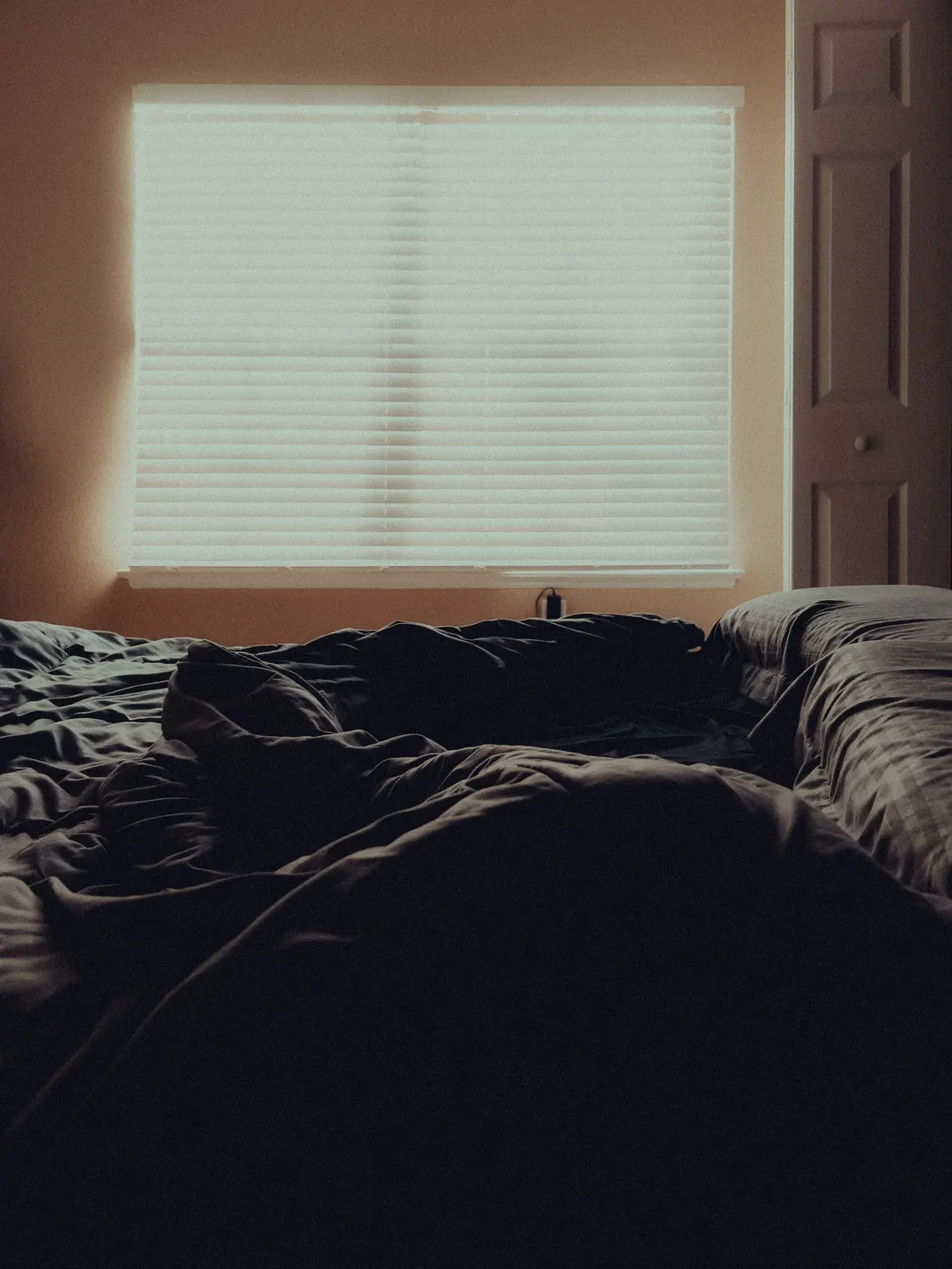
Look at the room you actually have
You do not need a bedroom makeover to begin a room review. Notice where light enters, what sounds you hear, and which parts of the setup you can change yourself. A rented room, a shared bedroom, and a room beside a busy street offer different choices.
NHLBI’s general sleep guidance recommends a quiet, dark bedroom and allows a dim night-light if needed. That is the context for this checklist. It does not establish that a particular change to your room will solve a sleep problem.
Separate the sources
Write “light through the blinds” rather than “bad room.” For sound, distinguish something in the room from a household activity or something outside. You are describing a source, not giving the bedroom a score.
Add when you notice it if that is useful. A detail such as “the hall light reaches the bed when the door is open” gives you something concrete to consider. You do not need to measure light or sound to fill in this form.
Mark what is within your control
Some sources are yours to adjust. Others need a conversation, a landlord’s permission, or no action from you at all. Put those differences in the notes rather than assuming every observation needs fixing.
An item marked “leave alone” is a valid outcome. The worksheet is not a list of faults you must remove.
Consider an ordinary change
Start with the controls already available
You might close an existing curtain, adjust a lamp you already use, or move an unnecessary glowing device to a more convenient place. Choose an option that fits the room’s usual use and the equipment’s instructions.
Do not cover devices or improvise electrical changes to make the room darker. The form is for ordinary household decisions, not wiring, soundproofing, or building work.
Discuss shared light and sound
If another person shares the space, identify the particular activity or source you want to discuss. “Could we use the other room for that call?” is a more concrete question than “Can you make less noise?”
You may agree on a change, discover that a different arrangement is needed, or leave the setup as it is. The sheet records a preference; it does not settle a disagreement or make another person responsible for your sleep.
Keep the room usable
Retain the light you need
Darkness is not a reason to make the room difficult to navigate. Keep whatever light you need to use the space. The night-light allowance in NHLBI’s guidance is a reminder that the room does not have to meet an absolute all-dark rule.
Keep essential equipment and access clear
Leave alarms, vents, exits, and equipment you rely on unobstructed. Do not turn off something important simply because it produces light or sound. If you are unsure about a device, leave it alone and consult its instructions.
For this review, a practical change is something you can consider without compromising another necessary use of the room.
Use the room-review sheet
Record a light source, a sound source, or a shared-room preference. Copy the entry if you want to consider another observation. Choose what to keep or revise after trying the arrangement; there is no completion target.
| Field | Your note |
|---|---|
| Light, sound, or shared-room preference I notice | Paper note: __________________ |
| Where or when I notice it | Paper note: __________________ |
| What I can control, if anything | Paper note: __________________ |
| A change to consider or leave alone | Paper note: __________________ |
| Someone else to consult, if relevant | Paper note: __________________ |
| Light I need to keep | Paper note: __________________ |
| Alarms, vents, exits, and essential equipment remain clear | Paper note: __________________ |
| Keep, revise, or restore the previous arrangement | Paper note: __________________ |
Before keeping a change, check that the room still works for moving around and for anyone who shares it. You can restore the previous arrangement if the change is not useful.
Keep a room review separate from sleep care
This sheet has no sleep score or diagnostic questions. It cannot tell you why you wake up or whether you need treatment. CDC advises discussing regular sleep problems with a healthcare provider. A completed room checklist does not replace that conversation.
Make room for evening preparation
The next-step button opens My Week with “Clear one small corner for the evening” already selected. That gives you a place for an ordinary preparation task.
Keep the light-and-sound notes separately. My Week does not import the room review or turn your observations into a sleep program.
Frequently asked questions
Do I have to remove every light?
No. NHLBI allows a dim night-light if needed. Keep the room practical to use rather than aiming for complete darkness at any cost.
What if I share the room?
Use the sheet to identify a specific preference and a change you can agree on. It is not a way to assign blame or settle a disagreement.
Do I need blackout curtains or a sound machine?
No purchase is required to use the checklist. You can start by noticing the room and considering existing controls.
What if the room seems comfortable but sleep problems continue?
The room review cannot explain that. Use the linked CDC guidance about discussing regular sleep problems with a healthcare provider.