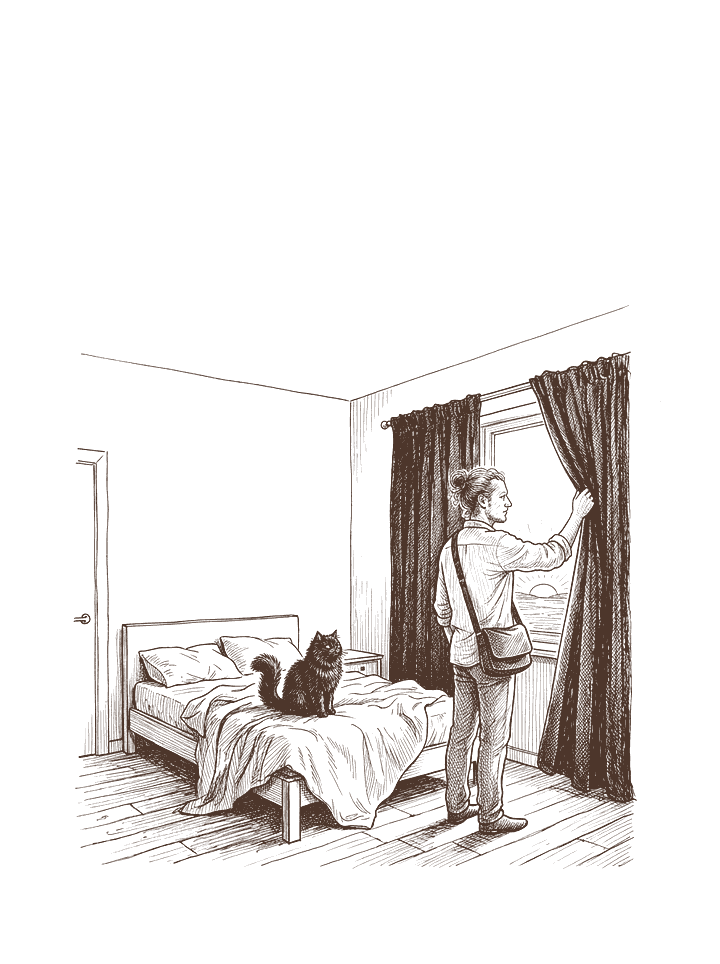
To sleep after a night shift, plan the journey home first: NHTSA warns against relying on caffeine alone to overcome drowsy driving, so arrange alternatives when you cannot safely stay alert. Then keep the bedroom dark and quiet during daytime sleep, as NHLBI suggests, agree with your household about deliveries and interruptions, and discuss difficult schedules with your employer.
For a night-shift worker, the journey home comes before the planned sleep opportunity. A quiet bedroom cannot make that journey safe. A useful plan therefore covers transport as well as the household and roster conditions that make daytime sleep possible.
What makes a sleep opportunity possible
NHLBI's shift-work advice suggests keeping the bedroom dark and quiet during daytime sleep. It also discusses minimizing shift changes where possible and discussing difficult schedules with the employer. The advice leaves room for a practical limitation: a personal routine cannot overcome every roster.
Daytime sleep may depend on agreements about deliveries, shared rooms, or care duties. Blackout curtains address light. An agreement about interruptions addresses a separate obstacle. Both can belong in the same plan.
Why the journey needs its own plan
NHTSA warns against relying on caffeine alone to overcome drowsy driving. Arrange alternatives when you cannot safely stay alert. If sleepiness develops while driving, stop safely. Do not postpone that decision until you have reached your usual sleep window.
A plan for the actual shift
| Question | Your answer |
|---|---|
| When does this shift finish? | ___ |
| What is the safe journey plan? | ___ |
| When is sleep realistically possible? | ___ |
| Which light or noise issue can be addressed? | ___ |
| Who needs the household agreement? | ___ |
| Which roster problem needs discussion? | ___ |
The sheet records arrangements for a particular shift; it does not treat a shift-work sleep disorder. A morning finish is still the end of the working period. The plan can reflect that reality without imitating an evening routine.
Where general planning ends
NHLBI discusses caffeine and naps in its general guidance. Their timing and suitability depend on context. This article does not prescribe melatonin, sleeping pills, or a caffeine schedule. If sleep difficulties or excessive sleepiness continue, seek a healthcare conversation.
The sheet can reveal a transport, household, or roster problem that a bedtime routine alone would leave unresolved.
From Pavel’s experience
Personal experience — Pavel Rachkouski, founder. One person’s notes, not advice.
I’m not a shift worker, but I have played late, until midnight. When I work with music, with the body, with people, it takes so much energy that afterwards I simply fall asleep. First I get a lift from people’s impressions, then it switches me off, and I sleep wonderfully.
Frequently asked questions
How can I make my bedroom dark enough to sleep during the day?
Blackout curtains address light; an agreement about deliveries, shared rooms or interruptions addresses a separate obstacle. Both can belong in the same plan.
Is it safe to drive home after a night shift?
Arrange alternatives when you cannot safely stay alert. NHTSA warns against relying on caffeine alone; if sleepiness develops while driving, stop safely.
Should I take melatonin or sleeping pills for shift work?
This page does not prescribe melatonin, sleeping pills or a caffeine schedule. If sleep difficulties or excessive sleepiness continue, seek a healthcare conversation.
Should I sleep before a night shift?
CDC/NIOSH training for nurses describes a nap before a night shift, called a prophylactic nap, which is usually long, lasting a few hours, and can help reduce the drop in alertness during the shift. The studies it cites found better alertness after naps of 1.5 to 3 hours before a night shift than with no nap. Their timing and suitability depend on context; this page does not prescribe a nap schedule. If sleep difficulties or excessive sleepiness continue, seek a healthcare conversation.