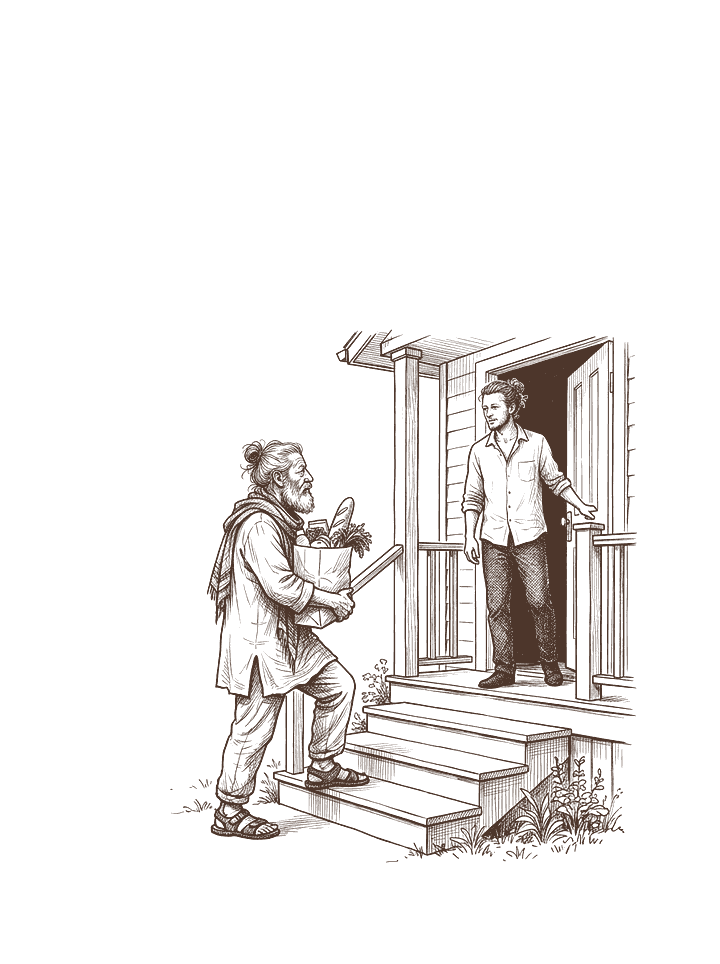
Healthy aging, as the World Health Organization describes it, is about what people can do and value: meeting their needs, learning, moving around, maintaining relationships and contributing. The surrounding environment matters alongside a person’s capacities, and being free of every health condition is not a requirement. This guide is not a physical test, an exercise prescription or a prediction about future independence; it helps you name an activity you want to keep and map the practical support it needs.
What would you like to keep doing: choosing food at the shop, making things, visiting a friend? Name the activity before choosing a measure of progress. The important details may be the entrance, the journey home or having someone available to help.
This guide helps you make an ability-and-support map. It is not a physical test, an exercise prescription or a prediction about future independence. You do not need to attempt a difficult task to complete it.
Look beyond doing everything without help
The World Health Organization describes healthy ageing in terms of what people can do and value, including meeting needs, learning, moving around, maintaining relationships and contributing. The surrounding environment matters alongside a person’s capacities. Being free of every health condition is not a requirement. WHO: Healthy ageing and functional ability.
The map below follows that distinction. Choosing your food and carrying every bag are different parts of a shopping trip. A delivery arrangement can support the part you value without making the choice less yours.
Choose your own meaning of a useful day. Someone else’s ambition to hike a mountain need not become your benchmark. Equally, an activity that looks modest to another person may be central to your life.
Describe the scene before choosing a solution
Replace “stay strong” with a scene such as “take my shopping home from the neighborhood shop.” Replace “keep my brain active” with “continue following the book club’s discussion.” Those descriptions identify an activity; they do not establish which training or treatment is appropriate.
Describe the place, the people involved and the part you value most. For shopping, that may be choosing food yourself; for a book club, the conversation. Carrying every bag or completing a page target may be separate questions.
Keep observations separate from conclusions. Steps at an entrance are something you can note; they alone do not settle whether the trip is possible. Ask about access arrangements without attempting a capacity test.
Divide the activity into three kinds of question
Practical arrangements: What needs to be available? Consider timing, transport, instructions, seating, cost and a way to leave. Our activity-accessibility guide helps turn a general access concern into a specific question for an organizer.
Skills or familiarity: Do you know the steps involved, or do you need instruction? Finding the original instructions for a familiar hobby is different from learning a new physical technique. A planning sheet cannot replace supervision or safety instruction.
Health or function: Has something changed, or are you unsure what is suitable? Put that question aside for an appropriate health professional rather than answering it with an online score. WHO describes rehabilitation as addressing how health conditions affect functioning and participation; whether it is relevant to you is a professional conversation. WHO: Rehabilitation.
These categories can overlap. Their purpose is to identify whom to ask, not to diagnose the reason for a difficulty.
Use an ability-and-support map
The following is a fictional planning example, not a recommendation about what anyone should lift or attempt.
| Question | Example: choosing food at the local shop | Your note |
|---|---|---|
| What matters to me? | Choosing ingredients myself | ______ |
| Which part is straightforward? | Finding the items and paying | ______ |
| What needs clarification? | Getting the bags home | ______ |
| Practical option to investigate | Ask whether the shop offers delivery after an in-store purchase | ______ |
| Person or service to ask | The shop’s customer service | ______ |
| Separate health question, if relevant | Describe a new difficulty to a clinician | ______ |
| Next action | Check the delivery terms before the next shopping trip | ______ |
Read the example as a question to investigate. It sets no carrying weight, declares no one fit or unfit and does not make delivery the answer for everyone. The shop’s reply may help decide the next arrangement.
Choose a next action tied to the activity: confirm a step-free entrance, ask a tutor about the format or agree a time to call a friend. Keep the question small enough to answer without trying to settle your whole future.
Bring an example to a health conversation
If your concern belongs in a health appointment, a description of an ordinary task can help explain what you mean. Note what has changed, approximately when and what you want to understand. MedlinePlus recommends preparing questions and describing symptoms clearly. Talking With Your Doctor.
You might ask: “This part of my usual day has become harder. What should we assess, and who can help me understand the options?” Do not wait to finish a worksheet when you need urgent help. Keep private health details with your appointment notes, not in a public planner.
Keep one next step, then revisit the map
Write the practical next action in your own notes: “Ask about the entrance” is clearer than “improve my abilities.” If one of My Week’s preset actions fits, you can use it to reserve time; keep the specific question alongside your own calendar or paper note.
Update the map when an answer arrives. Keep confirmed details, leave remaining questions open and adjust the arrangement around what you want to do. Support can be part of that arrangement.
Frequently asked questions
Does healthy aging mean having no health conditions?
No. In the WHO description on this page, being free of every health condition is not a requirement. What matters is what people can do and value, and the surrounding environment matters alongside a person’s capacities.
What are practical healthy aging tips for seniors?
This guide is not an exercise prescription. Its practical steps are to name the activity you want to keep, sort the question into practical arrangements, skills or familiarity, and health or function, and choose one small next action, such as confirming a step-free entrance, asking a tutor about the format or agreeing a time to call a friend.
Does healthy aging mean doing everything without help?
No. The page asks you to look beyond doing everything without help: choosing your food and carrying every bag are different parts of a shopping trip, and a delivery arrangement can support the part you value without making the choice less yours. Support can be part of the arrangement.
What is an ability-and-support map?
It is a short planning table on the page: what matters to you, which part is straightforward, what needs clarification, a practical option to investigate, whom to ask, any separate health question and a next action. It is a planning aid, not a test of ability.
When should I take a question about my abilities to a health professional?
If something has changed or you are unsure what is suitable, take that question to an appropriate health professional rather than answering it with an online score. Note what has changed, approximately when and what you want to understand, and do not wait to finish a worksheet when you need urgent help.