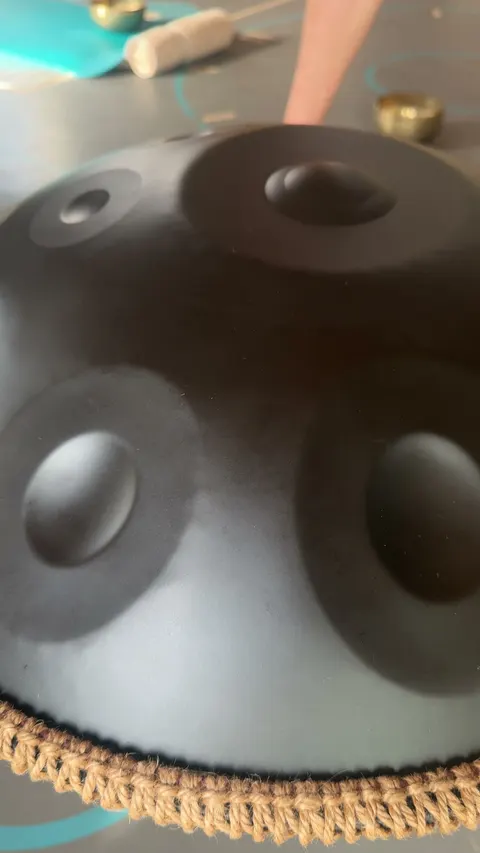
A handpan is a hand-played steel instrument: two steel shells joined at the rim, with a central note on top, a circle of tuned note areas around it and an opening underneath. The Hang is the original instrument of this shape, made by PANArt in Bern, Switzerland. “Handpan” is the general word that came later for similar instruments made by other builders.
The Hang came first
Felix Rohner and Sabina Schärer of PANArt developed the Hang in Bern in 2000 and presented it publicly in 2001. Hang is a registered trademark of PANArt. Researchers who measured the instrument describe it as a new hand-played steel instrument related to the Caribbean steelpan. PANArt itself does not call it a drum, and its makers discourage the name “hang drum”.
Where the word handpan comes from
As interest in the Hang grew, other workshops began building instruments of a similar form. The word “handpan” first appeared in 2007 on the website of the American steelpan maker Pantheon Steel and later spread through online player forums. Today it is used as a general term for the whole group. PANArt considers many of these instruments copies of its work, and Swiss courts have dealt with that dispute, so the two words are not interchangeable: Hang names one maker’s instrument, handpan names a category.
What it is made of
The Hang is built from two deep-drawn shells of nitrided steel glued together at the rim. PANArt’s earlier PANG instruments were the first steel instruments to use nitrided, or surface-hardened, steel. Builders of other handpans choose their own materials and processes, so ask the maker which steel a specific instrument uses and how it should be cared for.
How it makes its sound
The player sits with the instrument on the lap and strikes the note areas with the hands and fingers. Measurements of the Hang found that each struck note sounds several tuned components at once, in a ratio of 1:2:3 to the lowest one. The central note, the deepest, also works with the air inside the instrument and the opening below: by moving the knees, the player can change this deep resonance.
Questions to ask before buying
- Who built it, and is it a Hang from PANArt or a handpan from another workshop?
- Which steel and finishing process were used, and what care does the maker recommend?
- Which notes does it have, and can you hear a recording of this exact instrument?
From Pavel’s experience
Personal experience — Pavel Rachkouski, founder. One person’s notes, not advice.
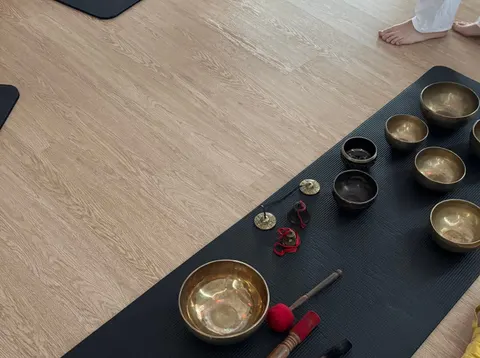
The hang is the main instrument I play when friends come to the park for sound healing. Everyone lies down and closes their eyes, and I play for about 45 minutes, mostly the hang, with singing bowls and Koshi chimes alongside.

Frequently asked questions
What does a handpan sound like?
Each note is struck by hand and rings with several tuned components together; on the Hang, researchers measured them in a 1:2:3 ratio. The deepest note sits in the middle, and the air inside the instrument adds a low resonance the player can shape with the knees. The best way to judge a specific instrument is to listen to a recording of it.
What is a handpan made of?
The original Hang is made of two nitrided steel shells glued together at the rim. Other builders choose their own steel and processes, so the material depends on the maker.
Is a handpan the same as a hang drum?
Not exactly. Hang is PANArt’s trademarked name for its own instrument, and its makers do not call it a drum. Handpan is the general term for similar instruments from other builders.
Is a handpan good for meditation?
Some people choose handpan recordings as a calm background, but that is a personal preference. We did not find research that tests handpan music as a meditation practice for the general public; the one study we found was in hospital patients (see the next question). If you are starting out, our guide to meditation for beginners shows simple ways to begin without any instrument.
Why do people find handpan music relaxing?
Nobody has shown why. Many listeners describe it as calming, and we can describe the sound itself: on the Hang, researchers measured each struck note’s components in a 1:2:3 ratio, and a deep central note sits below a ring of higher notes. That describes the instrument; it does not prove that those features cause calm.
The one handpan study we found comes from China in 2024. It added handpan-based listening sessions to usual rehabilitation for 98 hospital patients with anxiety disorder and compared them with patients who heard randomly played music; the authors report better scores for anxiety, sleep and emotion regulation. It is a single study of people in hospital, published in a journal that charges authors a publication fee; we could read only its abstract and did not check its peer review, and it does not show what handpan music does for anyone else.
On music in general, the US National Center for Complementary and Integrative Health says music-based approaches may help with markers of stress but that few definite conclusions have been reached. Music does not replace care for anxiety: if worry or poor sleep keeps going, talk to a health professional. Keep the volume comfortable, since very loud music can contribute to hearing loss.
Is a handpan hard to learn?
We did not find research that measures how long it takes to learn, so there is no tested answer. A sound comes from striking the note areas directly with the hands, and the notes are fixed in the steel. One maker says anyone can start by tapping the notes and that touch, rhythm and melody develop over time, with a teacher as an option. Makers sell these instruments, so treat this as their view. Another maker warns that playing too hard or with hard mallets can damage the tuning, so start gently.
Can a handpan go out of tune?
Yes. There are no pegs or strings to adjust: the notes depend on the shape and tension of the steel. Makers name heat and physical impact as the main causes. One says playing in direct sun can make the notes drift and that they come back as the steel cools; another warns that repeated high temperatures can warp the metal permanently. Dropping the instrument or hitting it hard can also shift the notes. How long tuning lasts depends on the instrument: one maker gives a two-year tuning warranty and says its instruments should stay in tune far longer with proper care, but we did not find independent tests. One maker warns against do-it-yourself tuning, and another says one wrong hammer strike can damage an instrument beyond repair. Ask the maker before you buy who can retune it and how to protect it from rust, especially in humid or salty air.