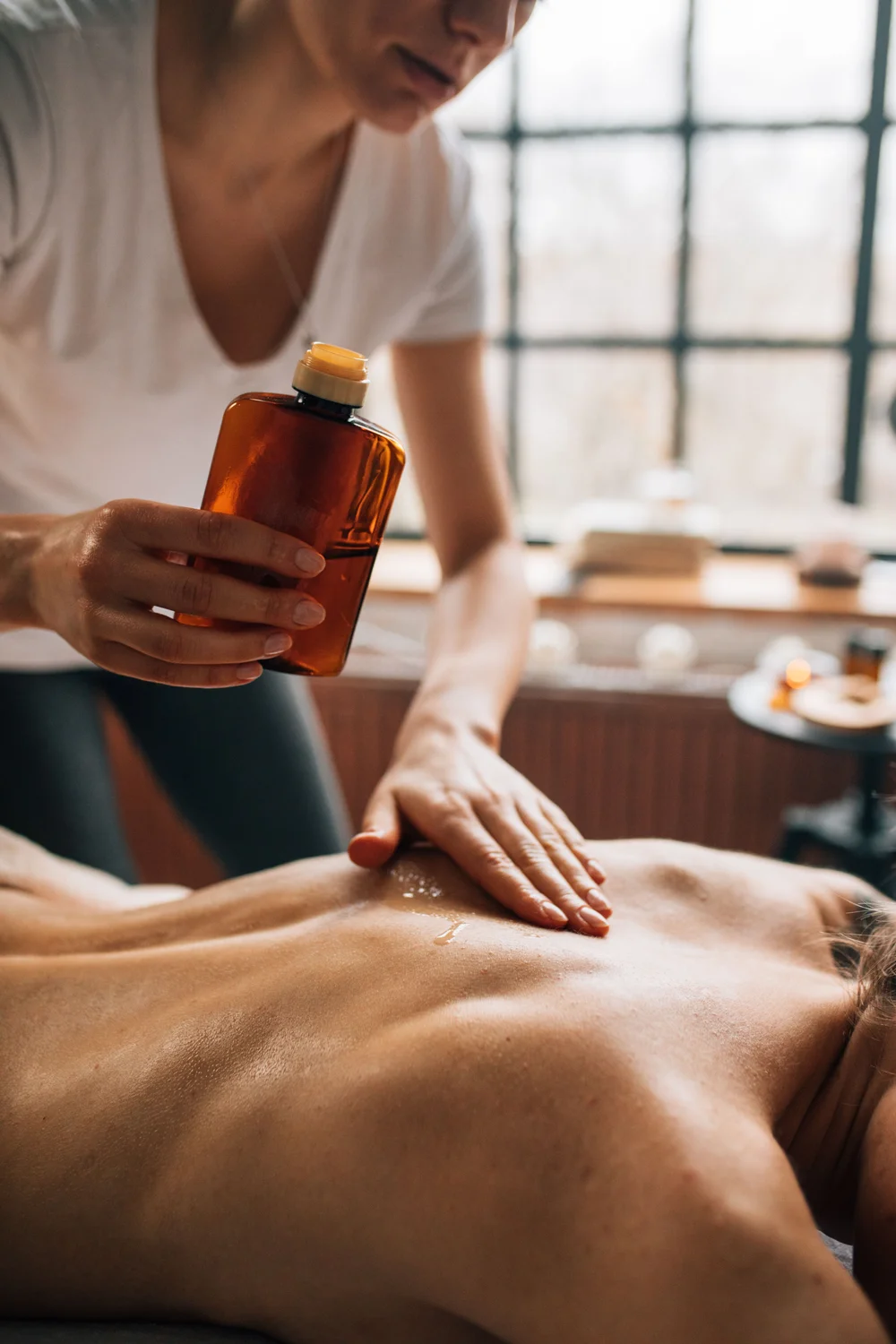
A simple massage without optional products is not an incomplete version of a more impressive experience. Equally, choosing a pleasant scent does not need a medical justification. I separate the offer into three parts: the massage itself, anything applied to your skin, and anything added to the room or service. Once those are clear, agreeing or declining becomes much easier.
When a massage involves scented oils or other extras, break the offer into three parts: the massage itself, anything applied to your skin and anything added to the room or service. Ask for the product name and ingredient list. The US Food and Drug Administration’s aromatherapy guidance explains that plant-derived ingredients are not automatically safe, since some can irritate skin or cause allergic reactions, and “natural” does not settle either question. Enjoying a scent is a preference; a health claim about an oil needs evidence about the claimed effect. This guide does not define aromatherapy massage.
Ask what the basic appointment includes
A menu name such as “signature massage” may cover several different elements. Ask the provider to describe them in ordinary language rather than repeat the name of the package. For example: “Does that include a scented oil or any warming products, and can those be left out?” This is more useful than asking whether the session is natural.
It gives you an answer you can act on. Also establish whether an extra replaces part of the massage or extends the appointment. A longer list of inclusions does not necessarily mean more time. If a scented towel is not important to you, you may prefer the original service without it. The point is to choose the experience, not collect every available addition.
Ask for the actual product, not just its description
“Botanical blend” is a description. A product name and ingredient list are information. Ask what will be used and whether you can see the label before it is applied. If the product has been transferred into an unlabelled container, ask to see its original packaging or manufacturer’s information. The US Food and Drug Administration’s aromatherapy guidance explains that plant-derived ingredients are not automatically safe: some can irritate skin or cause allergic reactions.
It also distinguishes fragrance products from products marketed with therapeutic claims. “Natural” does not settle either question. That does not mean you should try to judge every ingredient yourself. If you already know that you need to avoid a particular product or ingredient, say so before the appointment and ask whether the provider can accommodate that need.
If they cannot identify what they use, you do not have the information needed to choose that product confidently. I can help you identify a missing product detail; I cannot use that detail to test for an allergy or choose treatment for a skin condition.
Separate fragrance on your skin from fragrance in the room
Asking for an unscented massage product may leave another question unanswered: is there a diffuser, candle or other fragrance in the space? Be specific about your preference. “I would prefer no added fragrance in the product or the room” is clearer than “nothing too strong.” Ask what the provider can actually arrange, especially if the room is shared or used for other appointments.
Do not assume a request can be met simply because it appears in your booking notes. If the available setting does not suit you, knowing before arrival is better than discovering the difference when the session is about to begin. You can then decide whether to book elsewhere rather than negotiate an unexpected compromise.
Treat a therapeutic promise as a separate claim
I keep enjoyment of a scent separate from claims that an oil treats anxiety, repairs muscles or changes sleep. The first describes a preference. The others require evidence about the claimed effect. When an extra is sold with a health promise, ask what evidence supports that specific product and use, not whether the ingredient has an impressive history. You can also decline without starting a debate.
“I would like the standard session without that product” is a complete preference. The College of Massage Therapists of Ontario’s consent standard explicitly addresses informed decisions about topical products. It applies to regulated massage therapists in Ontario, not every provider worldwide; it is a useful example of why the contents of a service deserve discussion.
Confirm the price before the session changes
“Included” and “optional” are not opposites. Something can be included in the price and still be unwanted. Conversely, an apparently small addition may carry a separate fee. Ask whether declining an extra changes the price and whether accepting it changes the agreed duration. Get a clear answer before it starts. There is no need to turn the massage into a shopping decision halfway through.
Four questions to keep
-
Which exact product or extra would you use?
-
Can I see its ingredients and product information?
-
Can I choose the session without it, or without added fragrance?
-
Does that choice change the price or appointment length?
I would consider these questions answered when you understand the contents, price and available choices. You can then choose the details you want without treating the longest list of extras as the best appointment.