Give a starting point, not a performance target
Before the session, describe what you want in language you would normally use. “I prefer light pressure,” “I do not want my feet included,” or “Please explain before changing areas” gives the practitioner something concrete to work with. Avoid treating labels such as strong, deep or gentle as a shared measurement. Two people may attach different meanings to them.
If you are unsure, you can say: “Please start lightly, and we can discuss how it feels.” I offer that sentence as a way to communicate a preference. It is not a formula for medically safe pressure. You can also ask how the practitioner checks in. Some people prefer brief questions; others want to know they can interrupt without waiting for one. Agreeing on that at the start removes an unnecessary guessing game.
Make the request clear enough to act on
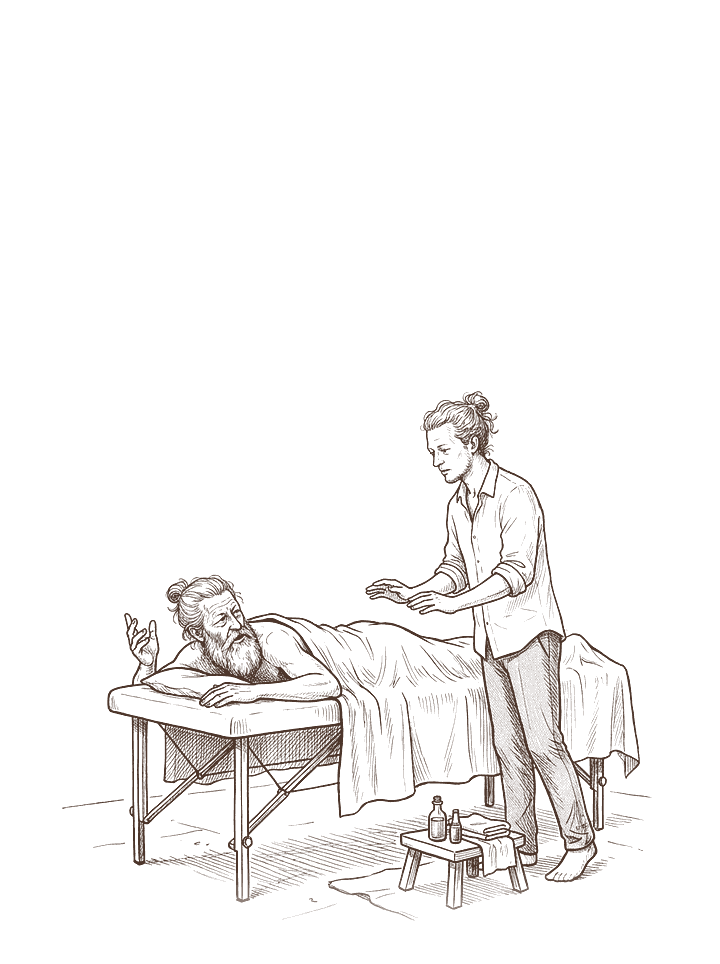
I use a more specific sentence when illustrating this point: “Please use less pressure on this shoulder,” rather than “It is a bit much.” The change and the location are both clear. You can point if words are awkward, while keeping any covering in place. There is no need to soften every request with an apology. “Lighter, please” is polite. If you want a different area omitted rather than worked on more gently, say that: “Please skip this area.” Those are different instructions, and clarity helps prevent an unwanted compromise.
Mayo Clinic advises speaking up if the pressure feels too strong. MAYO You can ask for less pressure without having to justify your preference. Your task is to communicate your experience, not demonstrate toughness.
Check that the change actually happened
After a request, notice whether the practitioner acknowledges it and adjusts. If the change is not enough, say so: “That is still more pressure than I want. Please stop working there.” A request is not a one-time allowance that you use up. You can revise it again. The College of Massage Therapists of Ontario’s consent standard requires consent throughout assessment and treatment and recognizes that it may be withdrawn.
These are Ontario professional requirements, not a description of every country’s law. They illustrate why consent is more than a form completed at reception. A technique name, a practitioner’s confidence or the fact that you have paid does not answer the question of whether you want what is happening now.
Distinguish a pause from finishing
I separate a pause from ending the session because you may want time to reposition, ask a question or decide, without yet knowing whether you want to continue.
“Please stop for a moment; I need a pause” communicates that clearly. You do not have to decide immediately whether to continue. If you want the appointment to end, use an equally direct sentence: “I want to finish the session now.” A request to stop should not become an invitation to persuade you to tolerate another few minutes.
If speaking during touch feels difficult, discuss a simple signal before starting and agree what it means. For example, a raised hand could mean stop and check in. Do not assume the practitioner will interpret an unagreed movement correctly. A signal should make communication easier, not replace the practitioner’s attention or make you responsible for managing their conduct.
You do not owe a personal explanation
A boundary can be specific without being autobiographical. “I do not want that area touched” is enough to state the preference. You need not disclose a private experience to justify it. This also means that the practitioner should not have to guess your reason. The immediate question is whether the proposed touch is wanted, not whether your reason meets somebody else’s standard. If your request is ignored, prioritize ending the interaction and getting somewhere you feel safe rather than trying to win the argument.
A small phrase card
-
To reduce pressure: “Lighter, please.”
-
To exclude an area: “Please skip this area.”
-
To understand a change: “What are you planning to do next?”
-
To pause: “Please stop for a moment.”
-
To finish: “I want to end the session now.”
You can use these words early. I have kept the phrase card short so that it is usable before words become difficult. You can ask for a change without waiting for an experience to become unbearable.
From Pavel’s experience
Personal experience — Pavel Rachkouski, founder. One person’s notes, not advice.
First I look at the tone of the muscle; I’ll put it as simply as I understand it in the moment. If it is already like concrete, I start working with it gently. If it pulses and twitches, neither one way nor the other, I look for a position to catch it, press it and squeeze everything out of it. That is what I see. What should you tell your therapist? Ideally, everything that bothers you, before the massage. Afterwards, give the most honest feedback you can: it helps the specialist grow. Even if you say something was bad or average, they will have something to work on. During the session I don’t ask people to say anything; in 99% of cases they start talking on their own. Sometimes, if I see a person needs it, I ask a few questions. I can only help them unpack; the work is always theirs.
Once a client stayed silent for a whole long session, holding every muscle and trying to control every move I made. At the end I just said: breathe out, you’re safe, everything is fine, there’s no danger. She burst into tears and hugged me: “How did you know?” I didn’t know anything. Then she talked for 40–50 minutes. Years before she had lived through something terrible and had never told anyone. Since then I know that sometimes a word does what my hands can’t.
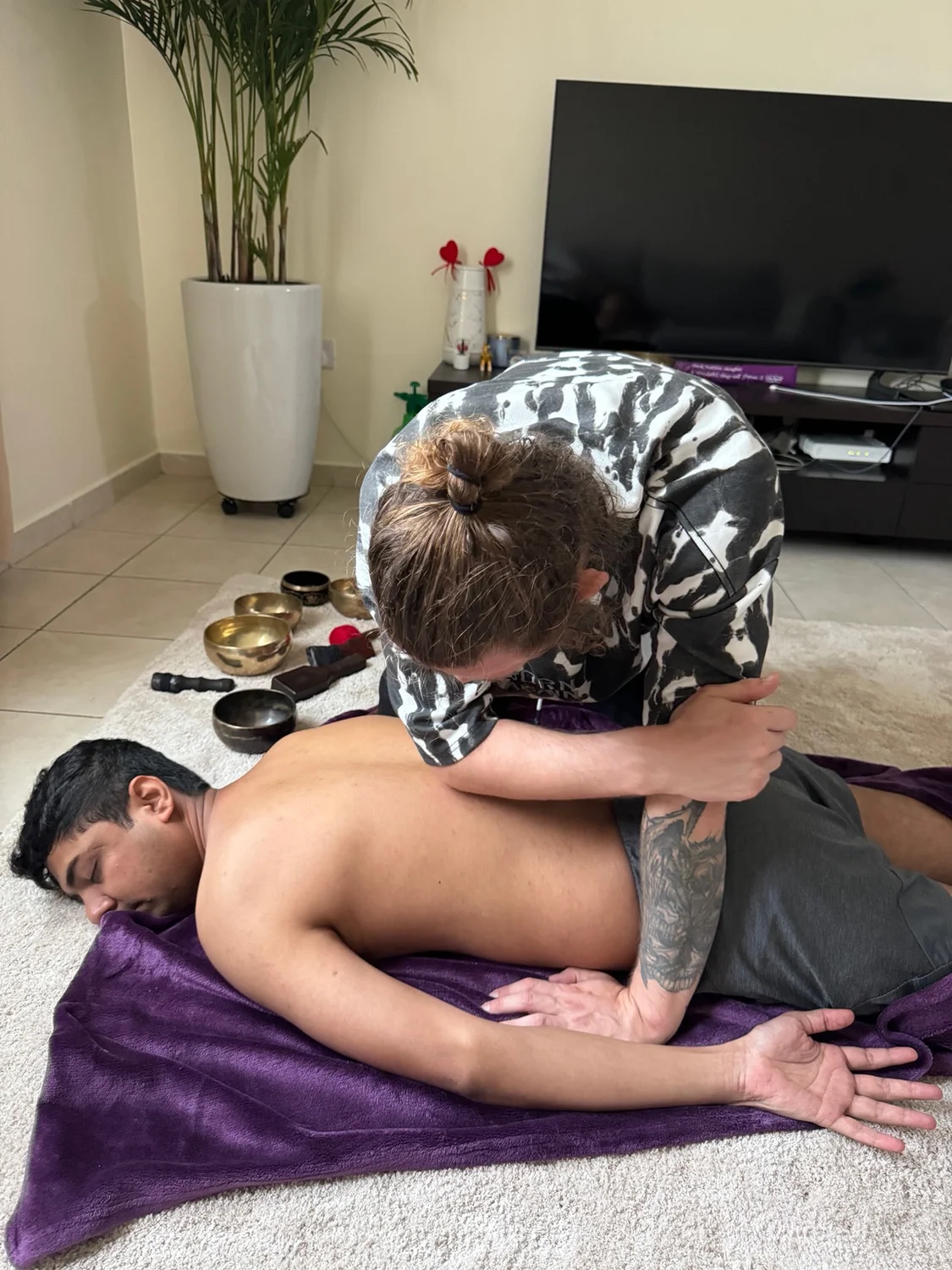
I try as much as possible to use my forearms and elbows instead of my hands, wherever that fits. Where it doesn’t, I work with my fingers and hands — where finer work is needed.
Some clients asked me things like “What are you doing tonight?” I’m very strict about this: I have never mixed work with my personal life, and I don’t now. No flings; the professional side comes first.
Frequently asked questions
How do I tell my massage therapist the pressure is too much?
You can ask for less pressure without having to justify your preference. A specific sentence works best: “Please use less pressure on this shoulder,” rather than “It is a bit much.” You can point if words are awkward. If the change is not enough, say so: “That is still more pressure than I want. Please stop working there.” Mayo Clinic advises speaking up if the pressure feels too strong.