Movement & Strength · Massage
Your First Massage Appointment: What to Confirm Before You Go
By Pavel Rachkouski · Prepared with AI assistance.
At a first massage appointment, ask whether the listed time includes an opening conversation, and follow your provider’s own instructions on arrival, forms and changing. Before you go, confirm the service and location, whether the listed time is the full slot or the hands-on portion, when to arrive, what to bring, the clothing arrangement for the booked format and the price. You remain free to ask questions, change your mind or decline an unexplained addition.
The unfamiliar part of a first massage appointment is not always the massage itself. It may be wondering whether to arrive early, whether the listed hour includes the opening conversation, or whether you need to bring anything. A few practical answers can remove that uncertainty. I have organised this guide around the details you can confirm with the provider: what you booked, how the visit works and what remains unanswered. That is enough preparation for this checklist; I am not adding a routine to perform before the massage.
Start with the booking confirmation
Check the service name, location, practitioner and start time. If the business has several branches, confirm the branch rather than relying on the first address in a search result. Then check what the duration means. “60 minutes” might describe the appointment slot or the hands-on portion of a longer visit. Ask which applies, and whether an initial conversation is included. Do not infer the answer from another business’s practice. I separate the booked slot from the hands-on time because that difference affects an ordinary detail: when you can expect to leave. Give yourself a realistic plan based on the provider’s answer, not an assumed extra period that they may not have available.
Work out the arrival, not just the address
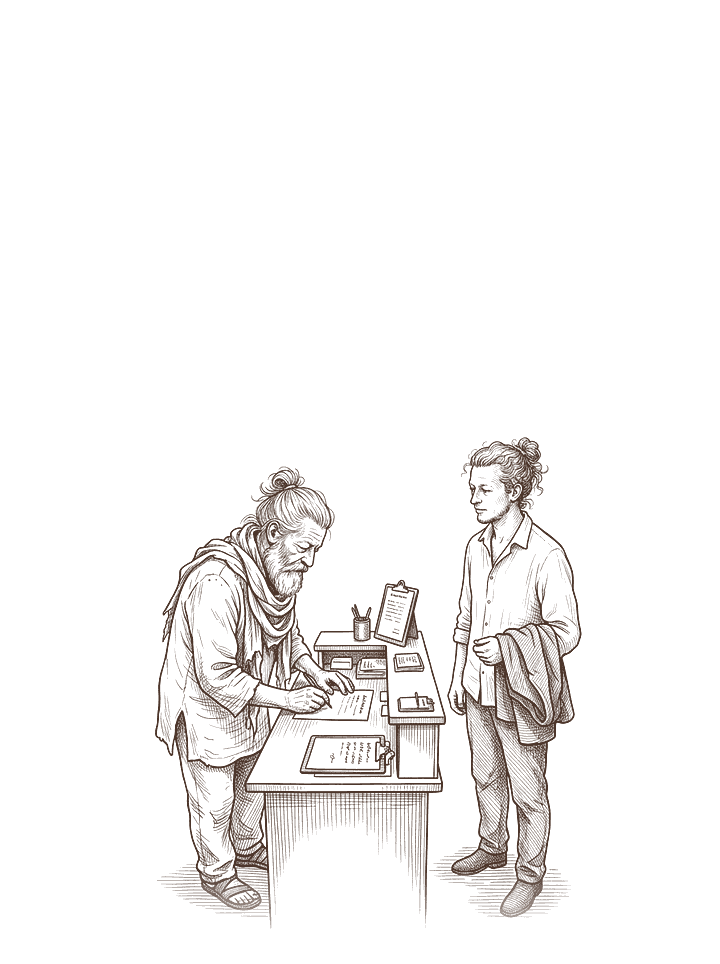
An address may leave the most awkward details unanswered. Which entrance should you use? Is there a reception desk? If the room is inside a shared building, how do you find it? Ask how early the provider wants you to arrive and whom to contact if you are delayed. If access matters to you, describe the practical requirement clearly.
For example, ask about step-free access or the location of the appointment room. Do not assume that photographs of a spacious treatment room describe the route into it. Save the confirmation somewhere easy to reach. One message containing the address and arrival instructions is more useful on the day than several open tabs.
Ask what to bring and how changing works
Follow the provider’s specific instructions rather than packing for an imagined standard visit. Ask whether there are forms to complete in advance and whether any documents are needed for the booking or payment arrangement. You can also ask what clothing arrangement the booked format involves. Mayo Clinic describes wearing loose-fitting clothing or undressing only to the point that feels right, and notes that chair massage may be an option for remaining fully clothed.
Ask what your booked format involves. MAYO There is no need to infer that every massage involves the same setup. If you prefer to remain clothed, say so before booking and ask what service the practitioner can offer on that basis. I keep preparation here to arrangements and questions. I do not prescribe fasting, a quantity of water or exercises before the visit.
If a provider gives you an unfamiliar preparation instruction, ask what it is for rather than silently treating it as a universal requirement.
Leave room for the opening conversation
Arriving is not the same as agreeing to an unexplained session. Expect a discussion about the proposed appointment and an opportunity to ask questions before proceeding. As one jurisdiction-specific example, the College of Massage Therapists of Ontario describes an explanation of proposed treatment, risks and benefits, and an opportunity for questions as part of informed consent.
These are Ontario professional expectations, not a claim that identical legal rules apply everywhere. S17 The planning point I draw from this example is simple: leave time for the conversation itself. You can say that this is your first visit and ask the practitioner to explain the sequence. Health information and individual suitability deserve their own discussion; a completed booking form is not a substitute for resolving an unanswered concern.
Confirm the price before the session changes
Check the agreed total and what it includes. If a different length or an optional addition is suggested, ask whether the price changes before agreeing. This is easier than trying to reconstruct the decision at the payment desk. Ask about accepted payment methods, receipts and the cancellation or late-arrival policy when booking. Where tipping or service charges might be relevant, ask the business directly instead of importing the custom from another country or setting. You can also decide in advance that you will consider future appointments later. A first visit does not require you to purchase a package to make the visit worthwhile.
Finish without rushing the decision
At the end, allow yourself time to get ready to leave and collect your belongings. Check the receipt against the service you agreed to. If you want to ask a follow-up question later, confirm the appropriate contact route. Before leaving home, make a small “confirmed / still to ask” note covering five things: the service and practitioner; appointment and arrival times; entrance and access; anything specifically requested to bring; and the price and payment arrangement.
Move each unanswered item into a short message to the provider. This is where I would put the checklist down: when its practical questions have answers. You do not need to keep preparing. You can arrive knowing the plan while still being free to ask questions, change your mind or decline an unexplained addition.
From Pavel’s experience
Personal experience — Pavel Rachkouski, founder. One person’s notes, not advice.
Once, in the second hour of a session, a man on my table started shouting and banging the table against the floor. I calmly lit a candle, suggested he pray, finished the session and stepped out. Later he apologised and said he himself didn’t understand what had happened. Strong emotions can come up on the table: tears, laughter, even shouting. It happens.
Funny things happen too. In Minsk my studio was ten minutes from home. Once I was lying at home completely relaxed, watching short videos, when a client called to say he’d be ten minutes late; he called fifteen minutes before the appointment. I got there in fifteen minutes, had everything ready in ten and met him as if nothing had happened. Another time, while I was working on a young man’s lower back, he passed gas. We just laughed it off; nothing bad happened. Women have fallen asleep and snored, and I kept working. Afterwards I’d tell them, “you dozed off a little, snored a bit.” They smiled; everyone reacted normally.
My room in Minsk was an ordinary one: my certificates hung on the wall, there was a chair, a screen to change behind and a sink for washing hands.
In Minsk people still ask when I’m coming back. In Dubai there are a few regulars too: a couple comes once a month. I do a session like a ceremony, a whole process: the person arrives and settles in, we do the work, and then we sit, drink tea and chat a little. I don’t skimp on time — three, three and a half hours — and I do it from the heart.
My very first massage was from my mentor. The moment he touched me I felt how tight and stiff I was, like a hedgehog. Afterwards I could finally relax; he said even my face had changed.
Frequently asked questions
Does “60 minutes” mean 60 minutes of massage?
Not always. It may describe the appointment slot or the hands-on portion of a longer visit. Ask which applies, and whether an initial conversation is included.
What should I wear to a massage, and do I have to undress?
Mayo Clinic describes wearing loose-fitting clothing or undressing only to the point that feels right, and notes that chair massage may be an option for remaining fully clothed. AMTA adds that on a table you lie under a sheet or towel that covers your body except for the part being massaged. You can also ask what clothing arrangement the booked format involves.
What should I bring to a massage?
Follow the provider’s specific instructions: ask whether there are forms to complete in advance and whether any documents are needed for the booking or payment arrangement.
What should I tell my massage therapist before a massage?
Mayo Clinic suggests being ready to share your goals, such as relaxation or relief in a specific part of your body, and any health conditions you have, and telling the therapist if you have allergies or are sensitive to scents. AMTA says the therapist will consider information such as your physical condition, medical history, lifestyle, stress levels, medications and any areas of physical pain. Speak up if the pressure feels too strong. You remain free to ask questions, change your mind or decline an unexplained addition.
Can I change my mind during the massage?
Yes. You remain free to ask questions, change your mind or decline an unexplained addition. The guide Massage Pressure and Consent explains how to ask for a change or a stop.
Sources / References
Pavel Rachkouski is the author and approving editor. Preparation and comparison with the listed sources used AI assistance. This version has not received independent human fact-checking or medical review. How we prepare nonclinical guides.
Continue reading
- Massage Oils, Scents and Extras: What to Ask Before You Agree
- Massage Pressure and Consent: How to Ask for a Change or Stop
- Reading a Massage Menu: Swedish, Classical and Other Labels
- Relaxation or Post-Exercise Recovery? Set a Clear Massage Goal
- Before a Massage: What Health Information Should You Discuss?