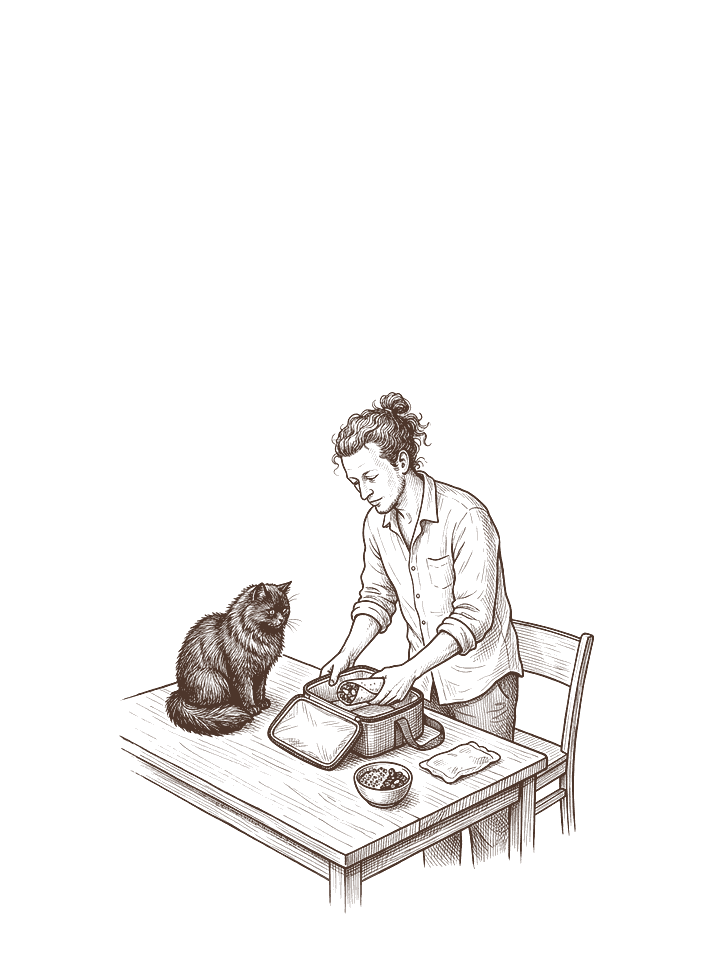
Good no-microwave lunches for work are foods you enjoy cold: a sandwich or wrap, a chilled grain-and-bean bowl made with a cooked grain labeled suitable to eat cold, or separate components such as bread or crackers, a familiar ready-to-eat item and fruit or vegetables. The harder part is keeping perishable food cold until lunch: USDA’s packed-lunch guidance recommends at least two cold sources, and refrigeration or a cooler on arrival where available.
Start with the facilities you actually have
Lunch without reheating still needs a storage plan. Start with something you enjoy cold, check the ingredients’ directions, and follow the meal from your kitchen to your lunch break. The missing microwave does not make an uncooled desk drawer suitable storage.
Before shopping, find out where the food and bag can stay and which utensils you will have. The workplace lunch facilities checklist keeps those questions together. If the available arrangement cannot meet the food’s storage directions, change the meal or the arrangement.
Match a lunch idea to its handling needs
Use the combinations as ideas to adapt to ingredients you know, not as tested recipes for portions, timing, nutrition or storage life. Keep product instructions and any ingredient requirements beside the choice.
A sandwich or wrap you enjoy cold
For a concrete starting point, read our chickpea, cucumber and carrot wraps. Follow the full recipe, including its packing and storage directions; this page does not replace them. Or start with a familiar bread or wrap and a filling that does not need reheating before eating. Pack separate items when you prefer assembling them at lunch. Perishable fillings still need appropriate cold storage; being ready to eat does not mean being shelf-stable.
A chilled grain-and-bean bowl
For example, choose a packaged cooked grain explicitly labeled suitable to eat cold, ready-to-eat canned beans and washed cucumber. Add a familiar dressing and a fork. If a grain product says it must be heated, do not treat it as ready to eat simply because it comes in a pouch. Preparation, chilling, transport and storage still need to follow appropriate instructions. This is not permission to leave cooked food at room temperature or a claim that a bowl made several days ago remains suitable.
A collection of separate lunch components
You might prefer bread or crackers, a familiar ready-to-eat component, and fruit or vegetables that fit their actual storage requirements. Check each component rather than giving the whole box a blanket “no fridge needed” label.
Check the instructions that apply after opening as well as before. An unopened shelf-stable item does not make every later use shelf-stable, and canned, cured or packaged foods do not all share one rule.
Keep the journey and the waiting time in the plan
USDA’s packed-lunch guidance recommends at least two cold sources for perishable packed food and refrigeration or a cooler on arrival where available. Read the full current instructions for the arrangement you use; a bag alone is not evidence that food stayed appropriately cold.
This article does not assign a safe storage life to your meal. The actual food, preparation, temperatures and handling matter. Do not infer safety from how long your commute usually takes.
Preparation still matters when you will not reheat
FoodSafety.gov’s four-step guide distinguishes cleaning, separating, cooking and chilling. Its separation section calls for keeping raw-food preparation away from food that will be eaten without further cooking.
Complete any cooking the food requires before packing. Cold describes the meal at the time you intend to eat it; it does not remove an earlier preparation step.
My next work lunch
Choose one familiar meal option, then complete its packing plan. This is a blank organization sheet, not a tested recipe or a food-safety assessment.
| Meal option and ingredients I recognize | Paper note: __________________ |
|---|---|
| Preparation or package directions to follow | Paper note: __________________ |
| What I want to pack separately or assemble at lunch | Paper note: __________________ |
| Which ingredients require refrigeration | Paper note: __________________ |
| How I will keep them cold during transport | Paper note: __________________ |
| Storage available on arrival and until lunch | Paper note: __________________ |
| Utensils, containers and assembly needed | Paper note: __________________ |
| Missing groceries to check before shopping | Paper note: __________________ |
| Known allergy/ingredient requirements to check | Paper note: __________________ |
| Alternative if the storage arrangement is unavailable | Paper note: __________________ |
Keep an alternative for a changed workday
If a meeting, trip or unavailable refrigerator changes the day, choose another meal that fits the actual facilities. You do not have to preserve the original lunch idea when its storage arrangement is missing.
FDA’s storage guidance tells readers to check storage directions on labels and warns that food can be unsafe without obvious spoilage. Do not taste an uncertain item to settle the question. Use current official guidance when the handling history is unclear.
Plan my work lunches, then check the packing
For ideas, open Build My Meals, choose Packable lunches and use the No reheating needed setup. Bring the result back to the packing questions above: the planner supplies ideas and a shopping list, while you still need to check labels, transport and refrigeration. It neither imports this worksheet nor tests the lunch.
This link carries the lunch and no-reheating choices, not your worksheet entries. If a saved plan already exists, keep or change it deliberately; the link is not permission to overwrite it.
For a broader approach to simpler meals, see meal planning when you hate cooking. Use the freezer inventory to record known stock; an inventory is not a safety verdict either.
From Pavel’s experience
Personal experience — Pavel Rachkouski, founder. One person’s notes, not advice.
I don’t take anything with me. If I’m out for the whole day, I stop at a restaurant somewhere to eat.
Frequently asked questions
What can I bring for lunch if there is no microwave at work?
Something you enjoy cold: a sandwich or wrap, a chilled grain-and-bean bowl, or separate components such as bread or crackers, a familiar ready-to-eat item and fruit or vegetables. Perishable fillings still need appropriate cold storage.
How do I keep my lunch cold without a fridge at work?
USDA’s packed-lunch guidance recommends at least two cold sources for perishable packed food, and refrigeration or a cooler on arrival where available. A bag alone is not evidence that food stayed appropriately cold.
What lunches don’t need refrigeration?
Check each item rather than calling the whole box “no fridge needed”. An unopened shelf-stable item does not make every later use shelf-stable, and canned, cured or packaged foods do not all share one rule; read the instructions for before and after opening.
How long can perishable food stay out of the fridge?
FoodSafety.gov, listed in this page’s sources, says never to leave perishable food out of refrigeration for more than 2 hours, or 1 hour if it is exposed to temperatures above 90°F (32°C).