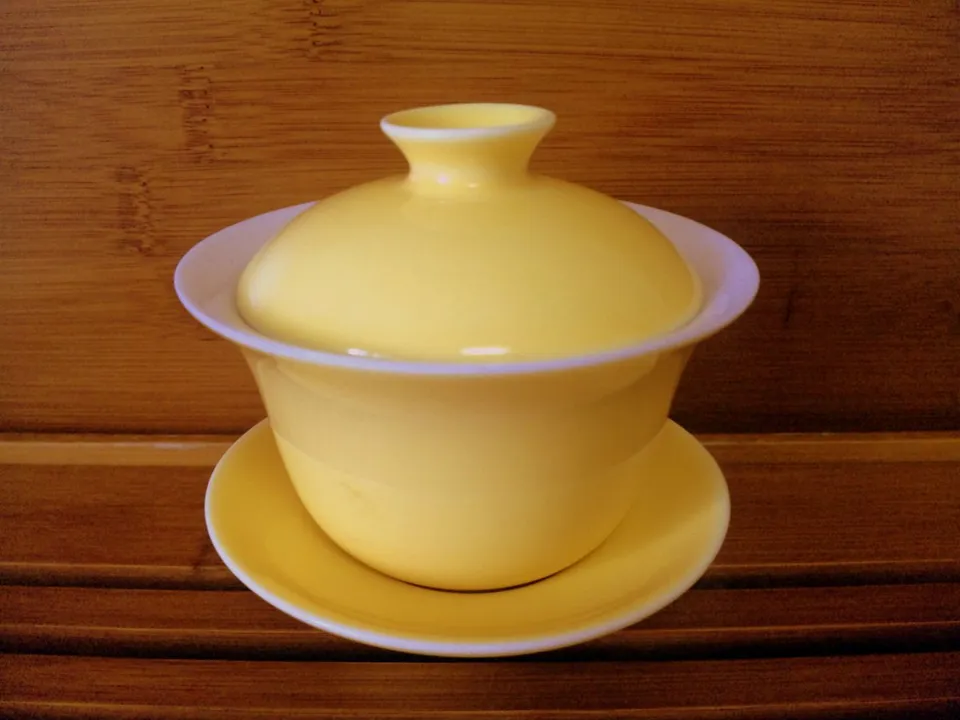
Begin with the everyday cup
Think about one normal occasion. Are you making a full cup while working, sharing tea with another person or sitting down for several small infusions? How much water do you actually pour, leaving comfortable space below the rim?
Measure that working volume once. A seller’s stated capacity may describe a brim-full vessel, which is not necessarily the amount you can handle comfortably. Start with a heat-safe cup you already like, checking that any added basket fits securely.
A basket infuser makes stopping simple
A removable basket separates brewing from drinking without requiring a second vessel. Lift it out at the chosen time and the leaves are no longer sitting in the cup’s water. Choose a basket with enough usable space for your usual leaf portion to open, rather than filling a tiny container tightly.
Look at the holes as well as the size. A fine tea can escape through openings that work well for larger leaves. Conversely, very fine mesh may take more effort to rinse clean. Check how the basket drains and whether its handle or tabs can be touched safely according to the manufacturer’s instructions.
Before buying anything, check the fit: will the basket reach into your normal water level, and will its rim stay supported? It also needs a heat-safe resting place after removal.
A small pot makes pouring part of the method
A handled pot can be comfortable for short infusions or for sharing a modest amount of tea. The useful capacity is the amount you want to decant at once. If you routinely make one small cup, a much larger pot may be awkward to use consistently.
Pay attention to the filled weight, handle clearance, lid security and spout. Can you pour without twisting your wrist sharply? Does the stream go where you expect? Can you empty the pot without putting a finger near escaping steam?
For a timed infusion, pour the tea into another heat-safe vessel or divide it between cups when the time is up. A pot left partly full continues to hold water against the leaves. Also allow for the time needed to empty it: a very slow pour is part of the actual brewing process.
A gaiwan asks for a different kind of handling
A gaiwan is a covered bowl, commonly used with a saucer. A historical covered cup and saucer in the Metropolitan Museum of Art’s collection documents this three-part form. [1] It gives easy access to the leaves, with no narrow pot opening to work around.
For decanting, the lid is positioned to leave a gap while keeping most leaves inside. That means managing a hot bowl and a separate lid together. Choose a size that fits your hand.
Practise filling and pouring with cool water over a sink before brewing. Leave room below the rim and keep the receiving vessel close on a stable surface. If the grip feels precarious, use a handled pot or basket instead.
Read material claims with proportion
Porcelain, glazed ceramic, glass and unglazed clay describe broad families of objects. They do not specify a particular vessel’s wall thickness, weight, lid fit or suitability for boiling water. Follow the maker’s temperature, cleaning and appliance instructions; do not assume ordinary glass is designed for hot brewing or that a metal-looking pot belongs on a stove.
There is also a difference between an admired object and verified everyday tableware. The Metropolitan Museum’s plum-blossom-shaped Yixing teapot shows how sculptural a tea vessel can be. Its collection record documents that particular object’s material and history, rather than promising that a material improves every tea. [2]
For functional pottery, choose a reliable maker and clear food-use information. FDA warns that lead in some improperly manufactured ceramic glazes or decorations can migrate into food and drink. Decorative-only pieces should not be used for serving. Washing or boiling cannot remove lead from pottery or make an unsafe piece suitable for tea. [3]
Price can reflect design, labour, decoration, provenance or collectability. It cannot tell you whether a pot fits your hand. If a seller cannot explain a material or an authenticity claim, leave that question unresolved rather than treating the price as proof.
A five-minute suitability check
With a vessel you own, use cool water to check:
- Your comfortable working volume, rather than the brim-full capacity
- Stability on the surface where you normally brew
- Grip and filled weight, including how you place the vessel down
- Pouring or basket removal, with a safe resting place for wet parts
- Access for cleaning and whether every part can dry properly
For an online purchase, turn the same points into questions about dimensions, weight, care instructions and a pouring demonstration. Buy for an identifiable improvement in your routine. Sometimes that improvement is one well-fitting basket; sometimes it is keeping the cup you already enjoy.
Sources
- Metropolitan Museum of Art. Covered Cup and Saucer. Chinese porcelain, Qianlong period (1736–95), object 14.40.254a–c. Museum collection record used to document the covered-cup-and-saucer form; checked 16 October 2026.
- Metropolitan Museum of Art. Teapot in the Shape of a Plum Blossom. Museum collection record for a Yixing stoneware object; checked 16 October 2026.
- US Food and Drug Administration. Questions and Answers on Lead-Glazed Traditional Pottery. Food-use cautions; checked 16 October 2026.