Ivan chai is a herbal infusion made from fireweed leaves. Learning the plant name, reading the ingredients and following the maker’s brewing directions will tell you more about a packet than a long list of wellness claims.
Food & Nutrition · Tea
Ivan chai and the plant behind the name
Prepared by Good & Steady · Sources checked
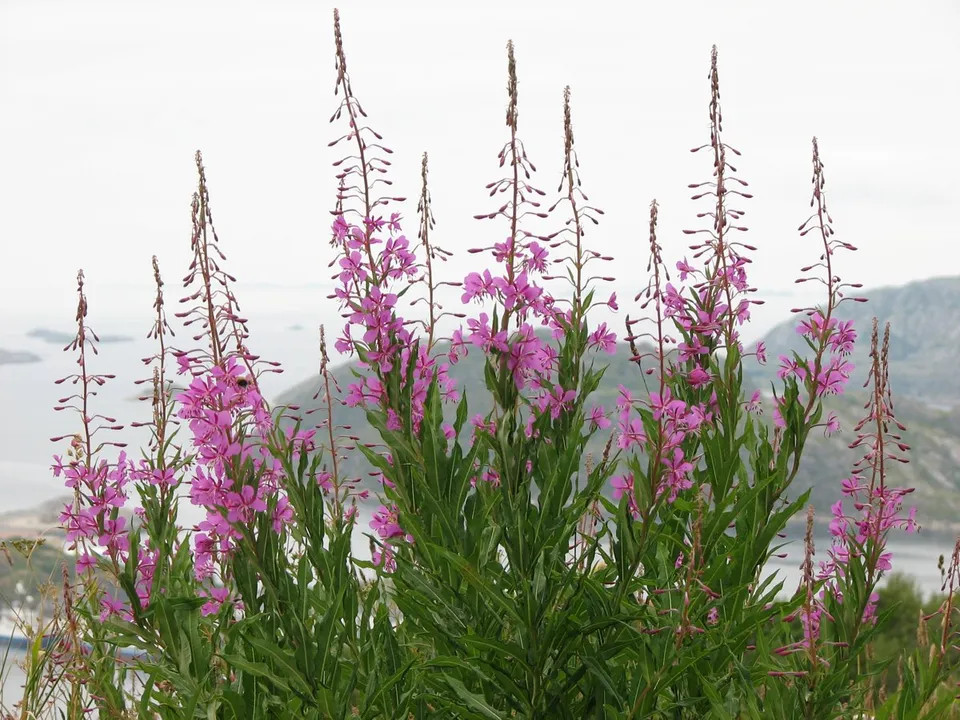
Fireweed photographed near Bodø, Norway, in 2009. Botanical context only; this photograph is not a foraging identification guide or a finished tea product.
FireweedNorway — Kefi. Public domain dedication by the photographer. Proportional resizing and WebP conversion; no crop or retouching. The original licence also applies to these derivatives.


A different plant in the tea cupboard
Pu-erh, Da Hong Pao and Tieguanyin are made from the tea plant, Camellia sinensis. Ivan chai belongs to a different botanical story. Its usual source is fireweed, Epilobium angustifolium, a flowering plant also called rosebay willowherb. You may see Chamaenerion angustifolium or Chamerion angustifolium on a label or in a book. These names reflect different taxonomic treatments; Kew currently lists the first of those as a synonym of Epilobium angustifolium. [1, 2]
Calling the drink a herbal tea is ordinary language. Calling it a herbal infusion is useful when you want to distinguish it from tea-plant leaves. Neither description makes a judgement about how interesting it can taste.
This distinction also helps you shop. A product labeled “willowherb” is not necessarily a single-ingredient fireweed drink. Other Epilobium species occur in commercial herbal products, and some packets combine fireweed with ordinary tea, fruit or other herbs. Look for a scientific plant name and a complete ingredient list rather than relying on the large print on the front. [3, 5]
A familiar drink with several names
Ivan chai, Ivan tea and Koporye tea are names you may encounter. The USDA’s plant guide records the use of fireweed leaves as a tea substitute or addition in England and Russia, including the Russian drink it calls Kaporie tea. This is enough to establish a history of beverage use without turning an appealing name into an extravagant origin story. [4]
What does fermented mean here
Commercial fireweed drinks include products described as fermented and non-fermented. The term deserves a little care. It does not establish a single method, a particular flavor or the presence of live microorganisms in the cup. [5]
Researchers have investigated solid-phase processing of fireweed leaves under different oxygen conditions and for different lengths of time. In one study, the conditions changed measured plant compounds. That is evidence about those samples and that production experiment. It does not establish a universal home-processing recipe or a health result from drinking the finished infusion. [6]
For the shopper, the useful question is simple: what did the maker actually do? Were the leaves rolled or crushed? How were they held and dried? Is the product loose leaf, cut leaf or granulated? A producer who can describe their method gives you something concrete to compare with another batch.
Colour alone will not answer those questions. A dark-looking infusion is not proof that fireweed is black tea, and it cannot tell you how a product was made. Use the description as a starting point and keep the packet so you can connect your tasting notes with the actual product.
Read the whole ingredient list
Pure fireweed is commonly described as a caffeine-free herbal infusion. That description should not be extended automatically to a blend containing Camellia sinensis or other ingredients. If the caffeine status matters to you, look for an explicit statement for the finished product and ask the producer when the label is unclear. [3]
Ingredient identity is worth taking seriously for another reason. A 2026 study used several laboratory methods to examine seven commercial fireweed-containing beverages. It found undeclared plant material in two samples. That small study does not tell us how often this happens across the market, and its findings should not be used to accuse an unrelated producer. It does show why traceable sourcing and accurate ingredients are more useful than attractive packaging alone. [5]
Before choosing a packet, check:
- Is fireweed the only ingredient, or is this a blend?
- Is the plant identified beyond a common name?
- Can you identify the producer and the batch?
- Are the storage and brewing directions readable?
- Does the seller explain the product without promising treatment, detoxification or a guaranteed effect?
A botanical photograph is helpful context, but it is not an identification guide for collecting plants. Begin with a food product from a traceable supplier rather than trying to identify a wild plant from a picture in an article.
Make a first cup you can repeat
Start with the directions on your packet. Different leaf forms and blends make a single recipe for every product unhelpful. For dried herbal infusions, Germany’s Federal Institute for Risk Assessment recommends water at a rolling boil and at least five minutes of infusion. Keep any longer time specified by the maker; do not borrow a cooler, shorter oolong recipe for a herbal product. If the instructions conflict, ask the producer. Record the amount, actual water volume, temperature instruction and steeping time. [7]
Use a heat-safe cup or pot and a strainer that makes it easy to remove the leaf at the chosen time. Measure the water into the brewing vessel rather than guessing from the capacity printed on its box. Keep boiling water and hot vessels on a stable surface, and let the drink cool before tasting it.
Here is a simple two-cup exercise that stays within the product’s directions:
- Make the first cup exactly as instructed. Drink a little plain before adding anything.
- Write three observations: the aroma, the main taste and the feeling left in your mouth. Everyday words are enough.
- On another occasion, repeat the cup while changing one permitted variable, such as the leaf amount within the maker’s suggested range.
- Compare the two notes. Which cup would you choose again, and why?
If the packet gives only one preparation method, keep its temperature and minimum time intact and ask the producer about adjustments. There is no need to improvise a cold-brew or fermentation method to make the drink interesting.
Give the actual cup the final word
Save the name and batch of a packet you like, alongside the method that worked for you. A different producer, blend or process may give you a different experience. Understanding the ingredients and making a repeatable cup gives you a useful basis for the next choice.
Sources
- Royal Botanic Gardens, Kew. Tea plant and Camellia sinensis. Botanical identity only; this article does not adopt the page’s health claims.
- Royal Botanic Gardens, Kew. Chamaenerion angustifolium in Plants of the World Online. Current synonym treatment checked 16 October 2026.
- Mykhailenko and colleagues. The effect of provenance and species on the chemical composition of Epilobium herbal tea. Pharmaceutical Biology, 2026. Botanical/product variability and the conventional caffeine-free description; not a clinical trial or batch certificate.
- USDA Natural Resources Conservation Service. Fireweed Plant Guide. Historical beverage use and plant names.
- Chudinov and colleagues. Proteogenomic investigation of plant constituents in herbal beverages. npj Science of Food, 2026. Seven commercial samples; limited evidence about product identification, not market prevalence.
- Lasinskas and colleagues. The Impact of Solid-Phase Fermentation on Flavonoids, Phenolic Acids, Tannins and Antioxidant Activity in Chamerion angustifolium Leaves. Plants, 2023, 12(2), 277. Processing study; no human drinking outcomes inferred.
- German Federal Institute for Risk Assessment. Boiling water a must for herbal teas. Published 2005, current accessible agency guidance checked 16 October 2026. Preparation hygiene, not a claim that brewing repairs contaminated products.